


APPLICATIONS FOR ACTIVE AND PASSIVE RFID TAGS
Applications for active and passive RFID tags.
RFID technology is divided into three types – Passive, Semi-Passive, and Active – depending on how the RFID tag is powered and how it interacts with the device. For a more detailed explanation, please read our basic RFID article .
Technical differences
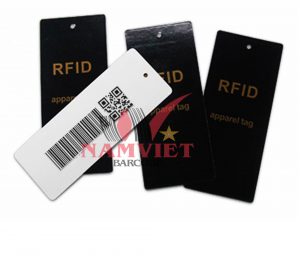
Passive RFID tags do not have an internal power source; instead, they draw energy from radio waves sent from a transmitting device. These tags interact with the reader by responding to and changing the radio waves. Therefore, the reading range of RFID tags is quite short (from a few centimeters to about 4 meters), and their memory is also limited.
Active RFID tags , on the other hand, have their own power source (battery) and transmitter. Active RFID tags use these two components to transmit information to the reader. Therefore, the operating range of active RFID tags can reach tens of meters and they have large memory capacity.
Semi-passive RFID tags are a hybrid version of the two types above. They have a power source but no transmitter, using a battery to power the connection to the reader. Data from the reader is still received back, but with battery support, less power is needed from the reader – thus increasing the operating range.
Applications of each type of RFID label
Passive RFID Labels
Because passive RFID tags are the least expensive of the three types, they are often used when managing large quantities of goods and do not require remote reading. Furthermore, passive RFID tags can operate at multiple frequencies, each serving a specific purpose.
Low frequency (125kHz): Has a low reading range but can read in environments with high levels of liquids and humidity. This type of tag is used for pet tracking as well as integration into car keys.
High frequency (13.56 MHz): This also has a low reading range (approximately 10cm) and the ability to operate in environments with high levels of liquids and humidity. This is the most commonly used type of label, found in access cards, library book markers, and laundry tags. NFC is also a technology that uses high-frequency RFID waves.
Ultra-high frequency (860-960 MHz): Offers the longest reading range among passive labels (up to 4.5m) but is not effective in liquid environments. These labels are commonly used in inventory management and transportation.
Ultrasonic frequency (2.45 GHz): This is the least common type of passive label, often used in goods control and applications that don't require a long operating range but need very fast data transmission speeds. This frequency is more commonly used with active RFID labels.
Active RFID Labels

Active RFID tags are the most expensive type, but they also have the longest range and are used on high-value assets. Because each tag has a transmitter, the signal is very strong and can reflect in metallic environments. Therefore, active RFID tags are very suitable for requirements requiring long range and warehouse environments with a lot of metal.
Active RFID tags typically operate at two frequencies, and the main differences lie in data transmission speed (the higher the frequency, the faster the transmission speed), memory, sensors, and shelf life.
Active RFID tags typically operate at a frequency of 433 MHz , according to the ISO18000-7 standard. These types of tags are commonly used for tracking pallets and containers, as well as military assets. In the commercial sector, active RFID tags are used in logistics, tracking vehicles and large, high-value assets.
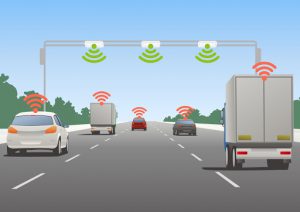
Active RFID tags using microwave (2.45 GHz) frequency are used for road toll collection, as well as for tracking the location of goods in warehouses, hospitals, or office buildings.
There are some types of active labels that use different frequencies, but these are not very common. Some labels use UHF (915 MHz) frequencies for tracking goods.
Active RFID tags, powered by batteries, can be equipped with additional sensors (temperature, humidity, or soil erosion), LEDs, buttons, or perform other functions. These specialized tags can be used to monitor temperature in truck containers, for transporting frozen goods, or pharmaceuticals.
Semi-passive RFID labels
Semi-passive RFID tags typically use UHF frequencies and protocols similar to passive RFID tags. However, they can be read over longer distances and can be fitted with sensors – often temperature sensors. These types of tags are used to track high-value goods and monitor temperature-sensitive products such as pharmaceuticals and fresh food during transport.
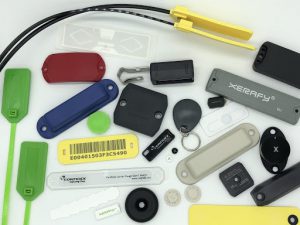
Source: rfid4u.com
Share:


