


APPLICATIONS OF RFID IN HOSPITAL MANAGEMENT AND OPERATION
With strong technological support, hospitals are always hotspots for increased technology adoption in operation and monitoring. RFID is one of many advanced technologies adopted by Western countries to track patients, hospital operations, and hospital assets. Let's explore how they use and apply RFID in hospital management and operation .
Here are 7 practical RFID applications in hospital tracking and management.
1/ APPLICATION OF RFID FOR TRACKING INVENTORY OF MEDICINES AND PHARMACEUTICALS
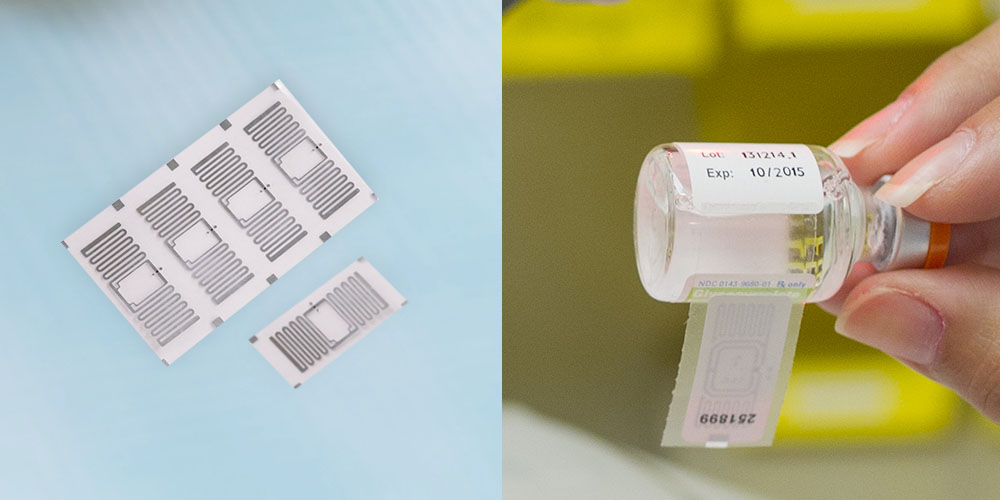
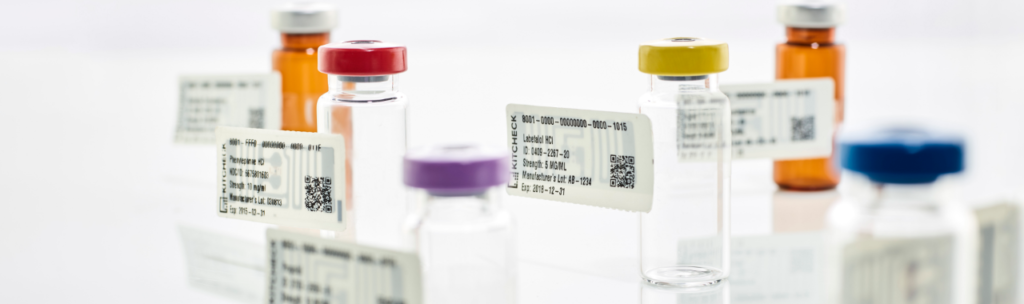
In hospitals in general and in the healthcare field in particular, medicines and pharmaceuticals play an extremely important role. Therefore, how to effectively manage and control this "object" is a matter of great concern. With the requirement to manage a large quantity of medicines, diverse in types and uses, and to update accurate and timely data (regarding drug entry date, manufacturing date, expiration date, etc.), RFID is considered the best solution. RFID applications help improve the accuracy, time, and labor involved in tracking and inventory activities. When applied, RFID tags can be attached inside or outside medicine bottles/boxes. Data is recorded via handheld or fixed barcode readers using radio waves, without the need for direct contact between the scanning beam and the barcode as with barcode technology.

Furthermore, RFID also plays a role in authentication. What does this mean? It means that with so many counterfeit and substandard drugs flooding the market, manufacturers have decided to choose RFID technology as a tool to verify the quality and origin of the products they supply. To achieve this, RFID tags, encoded with specific information, are placed on/inside the drug bottles/boxes. When the drugs are delivered to hospitals and healthcare centers, their information is authenticated through these RFID tags.
2/ TRACKING PATIENTS AND STAFF THROUGH RFID APPLICATIONS
You may not know this, but every year, a significant number of newborns are swapped or stolen from hospitals and medical centers. To minimize such incidents, hospitals have implemented proactive RFID tags (usually in the form of bracelets or anklets) along with real-time location tracking (RTLS) systems on each child. If the child is brought near an emergency exit, an alarm will sound, simultaneously activating the automatic door locking system. If someone attempts to remove the tag from the child, another alarm will sound, indicating the child's location.

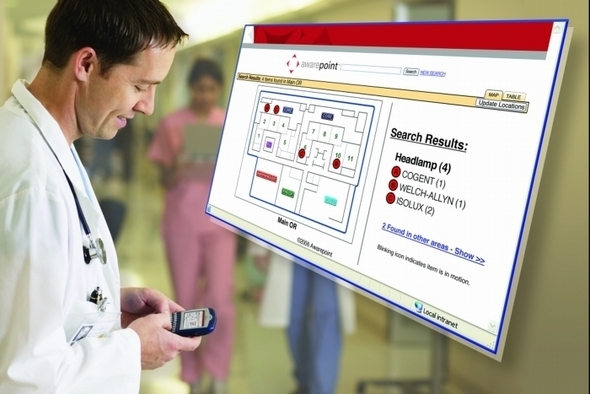
The proactive use of RFID tags is also implemented in various ways at hospitals and medical centers, such as tracking staff and patients. The main purpose is to ensure faster and more efficient patient care. When RFID is applied, staff/patients are issued an RTLS badge, and the system verifies their location and reports that data to the management team.

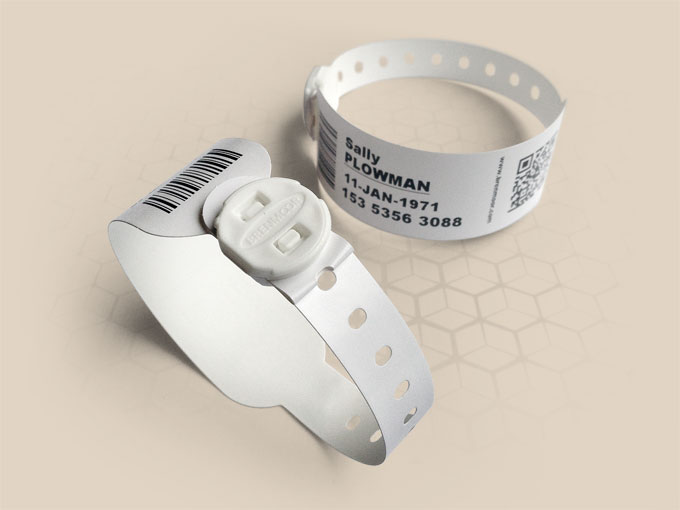
So what about passive RFID systems? The primary application of RFID is maintaining and verifying patient records through wristbands with integrated RFID chips. Patient information is printed on the wristband, while the patient record is stored on the chip. This application not only helps prevent information mix-ups that could affect treatment but also assists in emergency situations to ensure patients are not given the wrong medication or sent to the wrong treatment area.
3/ APPLICATION OF RFID FOR MANAGING SURGICAL INSTRUMENTS
It is dangerous to use surgical instruments that are not properly managed or sterilized. This can not only harm the health and lives of patients but also damage the reputation of the hospital or medical center. Therefore, instruments must be ensured to be clean, sterilized, and ready for use.

When using RFID, users need to select the correct type of tag for the specific application because the tag must be resistant to interference when attached to metal devices and able to withstand autoclaving.
4. Track single-use items using RFID technology.
In hospitals and healthcare centers, disposable items such as bandages, gauze, gloves, etc., are essential and need to be stocked to ensure timely and continuous use. Because these are low-cost items, using expensive RFID tags for tracking and management is impractical and wasteful. Instead, RFID stickers are a suitable solution for applying RFID technology to these items.

By applying RFID technology to disposable items, hospitals can track which staff members have used or withdrawn items, ensuring proper usage, reducing waste, and preventing theft.

5. RFID APPLICATIONS FOR TRACKING VALUABLE ASSETS AND EQUIPMENT
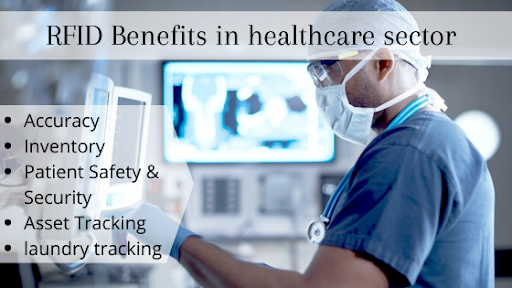
Many valuable items, equipment, and assets in hospitals require precise and strict management. If an unfortunate incident occurs, the cost of replacement is significant. Furthermore, many items are not readily available for replacement or require very long waiting times. Therefore, the application of RFID is considered an ideal solution in this situation and has been successfully implemented by many hospitals and healthcare centers.

At this point, the RTLS system will also be deployed simultaneously with the use of RFID tags on assets and equipment. The system helps to determine the location of these objects at all times. Depending on needs and investment costs, hospitals and healthcare centers can set up this system in one or several specific areas or the entire premises.
6. Access Control Using RFID Application
How can we restrict access to restricted areas for unauthorized persons? Would warning signs still be effective in this case? The answer is definitely "No!". Instead, RFID technology is the solution that helps hospitals implement this effectively and rigorously, ensuring that unauthorized persons cannot enter restricted areas.
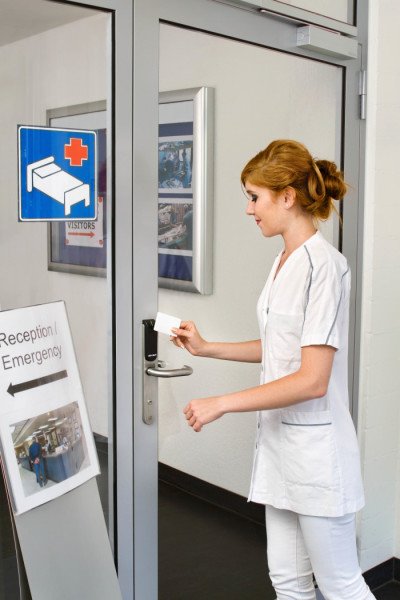

Individuals with access rights to restricted areas are issued a unique RFID plastic card. They must swipe or tap this card on a dedicated RFID reader to gain entry. This system not only restricts unauthorized access but also prevents theft and resulting losses.
7. APPLICATION OF RFID IN LAUNDRY MANAGEMENT AT HOSPITALS
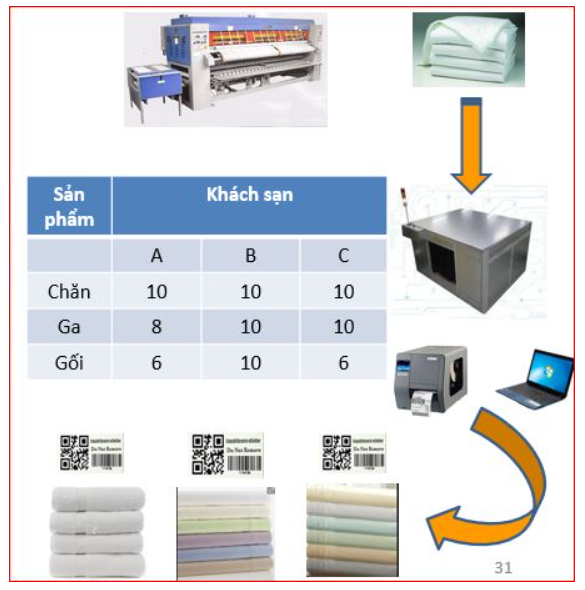
Towels, blankets, sheets, patient gowns, etc., are indispensable items in hospitals, healthcare centers, and medical facilities. The key concern here is how to accurately track and manage the quantity and condition of these items, ensuring they have been cleaned and are sterile. RFID laundry tags are a specialized RFID application specifically designed for this purpose.
Seven RFID applications for tracking and management in hospitals in particular, and the healthcare sector in general, have demonstrated that RFID technology is not exclusive to manufacturing and warehousing.
Share:


