


Applying Barcode and RFID Technology to Improve Traceability
Product traceability can now be significantly improved to increase productivity, transparency, and economic efficiency thanks to the real-time application of barcode and RFID technology.
Four steps to food supply chain traceability: Food and beverage manufacturers need to be cautious, proactive, and prepared.
New regulations through the U.S. Food and Drug Administration's Food Safety Modernization Act have brought about increased scrutiny of the systems that food manufacturers employ. Fortunately, technologies are now available that allow for better management of inventory, warehousing, and distribution functions.

Below is a deeper look at how food manufacturers can improve traceability using barcode and RFID technology.
Using barcodes and RFID technology offers several key advantages for companies, including:
- Track food shipments as they are distributed from warehouse to final destination, whether it's a restaurant, distributor, or consumer.
- Record the expiration date of the product in a specific shipment, whether it's a pallet, container, box, or package.
- Improve efficiency in warehouse management, delivery management, and distribution.
- Eliminate waste by reducing the purchase of excessive ingredients or products.
- In the event of a recall, trace the source of contamination back to its origin.
What are they?
The barcode may contain extended information about the package's contents, including:
- Location identification.
- Product identification numbers, such as individual product codes, invoice information, lot numbers, and serial numbers.
- Product features.
RFID (radio frequency ID) technology tags products that can be tracked to find timestamps and transaction records and, in some cases, even record temperature and other environmental information.
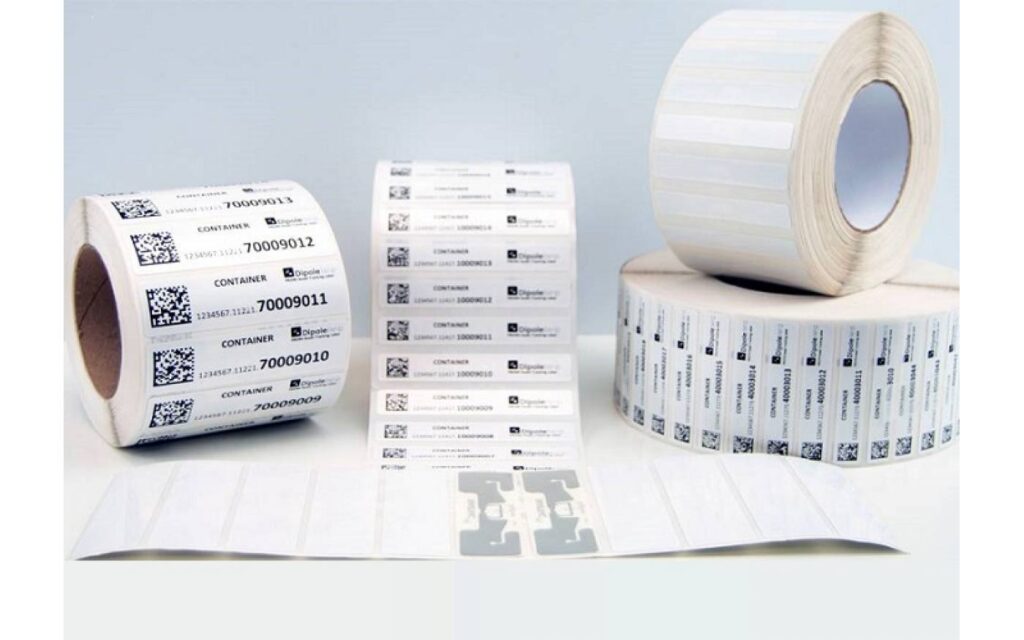
Barcodes and RFID tags help businesses in many ways.
Improve efficiency:
Manually tracking and recording information can be time-consuming and labor-intensive. The same information can be uploaded directly to a computer system when a barcode is scanned. Scanning items loaded onto trucks speeds up delivery times and reduces downtime.
Better accuracy:
Barcodes are nearly perfect in terms of data accuracy. Manual systems are prone to errors, and misinformation can be serious during the recall process.
Comply with regulations:
FSMA rules require companies to have specific plans in place to manage products and ingredients throughout the manufacturing process and across the entire supply chain.
Batch control:
Lot numbers and expiration dates can be embedded in both barcodes and RFID tags and applied at the item, inner package, casing, or pallet level. Such information helps provide accurate information and ensures that pre-input/pre-output procedures are used to guarantee freshness and reduce waste.
Manufacturers and distributors need to have plans in place for recalls. With more traceability tools, food companies can limit the scope of recalls by precisely identifying the specific products, down to lot number, that need to be recalled. This specificity leads to lower costs for both manufacturers and customers.
Managing the complexity of today's food manufacturers requires simplified software. At Nam Viet Group, we work with food manufacturers to identify enterprise resource planning (ERP) solutions that integrate operations, sales, finance, marketing, and customer service functions.
Share:


