


Applying RFID technology to patient information management.
The application of RFID in patient care at hospitals is one of the new technologies used to better manage patient care, promote and improve the quality of medical examinations, treatment, and healthcare services. Hospitals and patient safety are crucial. Currently, hospitals face several issues such as incorrect medication dispensing , improper room allocation, improper use of medical equipment, equipment loss, lack of control over patients and their families, inconsistent experience among doctors and patients, and mismatched equipment, all of which can easily lead to incidents and problems.
The use of RFID tag technology in hospitals, patient management, and other areas has been widely adopted and developed in developed countries worldwide. In Vietnam, RFID technology is still relatively new and will only become effective when its significance is recognized and there is a commitment to its use. With the rapid development of RFID technology, its application in hospital management is becoming easier, more efficient, and more affordable.
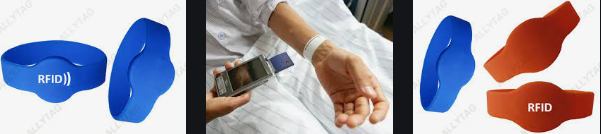
RFID technology solutions in patient care for diagnosis, replacing barcodes in patient identification, are one of the futures of patient identification… The investment cost for providing an RFID system to hospitals does not increase. The RFID system includes RFID tag counting, RFID tagging, and RFID middleware integrating RFID devices and operating system software.
Today, RFID labels are very inexpensive and come in many different formats, utilizing RFID technology in patient care to meet various needs.
Other common types of RFID tags used in hospitals include the following:
In hospitals, you can use related RFID tags for each patient for management. These could be RFID bracelets to be worn directly on patients, RFID tags to be attached to patient records or on hospital beds, or even hard cards to create medical examination and treatment cards…
RFID applications are becoming increasingly common in hospitals worldwide; however, hospitals in Vietnam are still widely using barcodes, and some hospitals are considering replacing barcodes with RFID technology for patient management.
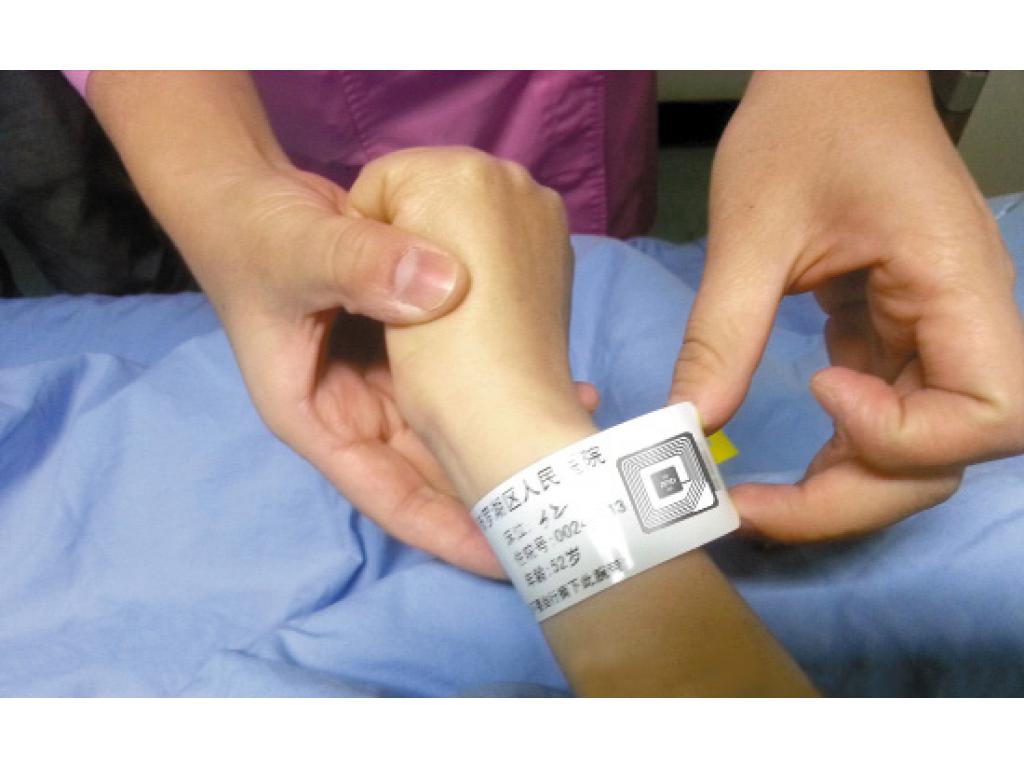
Patient management requirements:
RFID tags are affixed to patients' bodies at hourly intervals. At each appointment, inpatients receive a health check-up slip along with a code containing their information stored on a computer.
Nurses should be present in the central nursing room to review vital patient results and the condition of medical equipment in the ward. However, with the help of laptops, nurses can monitor patient conditions and make necessary adjustments to medical equipment while they are on-site.
With mobility, you can accomplish many tasks quickly. This allows nurses to better care for their patients and increase productivity by eliminating the need to return to the nursing center or clinic to perform important tasks.
An RFID system consists of an RFID tag (a device attached to the object being tracked) and a tag reader connected to each other by a central computer. RFID tags have a chip and antenna, can store various information and data, and are protected by a highly durable composite casing against damage from chemicals, high temperatures, etc.

With its compact size (smaller than a grain of rice), the RFID tag can be attached to clothing or designed to be worn as jewelry (rings, bracelets, etc.) by patients during treatment. Simultaneously, a reader installed at the hospital or ward entrance (with a working radius of approximately 30 meters) will transmit radio waves via an antenna and receive the signal back from the tag.
The FID contains a partial identification number (assigned to the patient).
See also: The latest products at RFID Chip
The reader decodes and transmits complete information to the machine, such as location, full name, patient, doctor, prescription, blood type, medical history, drug allergies, etc., enabling quick, accurate, and safe medical examinations and treatments.
Features and tools:
- Connect nurses to the latest patient information, monitoring equipment, infusion pumps, medical records, and medication schedules, no matter where they work.
- Allow staff time to focus on patient care rather than paperwork.
- Reduce patient response time.
Share:


