


Are RFID Tags Secure? Expert Answers
Are RFID tags really secure? RFID technology is now widely used in many different fields such as warehouse management, tracking goods and assets, and access control. In addition, RFID tags are used in timekeeping cards, library cards, and vehicle access cards. Despite the clear benefits of RFID, concerns remain about the safety and security of these tags. Is personal information easily stolen? This article will help you find the answer in more detail. Let's find out!
Answer: Are RFID Cards Secure?
RFID technology allows users to identify objects through radio wave transmission, enabling fast, efficient, and accurate management. An RFID system includes: RFID tags, RFID readers, antennas, and system software. RFID technology is highly regarded for its security and data protection, providing maximum user satisfaction.
In fact, stealing data from RFID tags is very difficult, especially in highly secure systems, because each tag contains only one chip and a unique sequence of numbers. Therefore, it can be asserted that RFID tags are very secure.

RFID tags can store a large amount of data, with a capacity exceeding 2000 kb, including identification numbers and serial numbers. Currently, there are many different types of RFID tags, from read-only to writable and editable tags, allowing users to add or delete data. You can learn more about RFID tag types in the article "Common RFID Tag Types and Their Applications".
RFID tags exist as unique identifiers of up to 32 bits, equivalent to 4 billion different codes. This makes tag duplication or misidentification very difficult. To date, RFID tags are considered the most secure, and no other type of tag can match them in this respect.
Potential Risks from RFID Tags
Although RFID tags are considered relatively secure, no technology is completely immune to risk. RFID tags can easily be intercepted if they fall into the wrong hands with specialized RFID readers. This is possible because RFID tags allow for remote information transmission. Furthermore, there is a possibility of counterfeit RFID tags, or their use to track user behavior and location, raising concerns about personal privacy.
In many cases, customers' RFID tags have had their data copied using specialized equipment. In a previous article, we presented methods for copying and protecting RFID tags; readers can find more information here: How to Copy RFID Tags Simply and Easily.
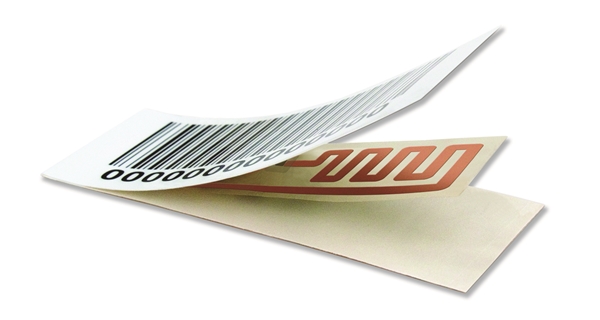
Solutions to Enhance Security for RFID Cards
Given the risks of information theft from RFID tags, we have compiled several solutions to enhance the security and safety of these tags as follows:
Use the Activation Switch
This is a type of button that activates RFID tags only with the cardholder's permission. Using an activation switch ensures that the information on the tag is only accessed when the cardholder authorizes it, thereby preventing any unauthorized copying or access.
Use RFID tags with a protective shield.
RFID tags with protective covers have an insulating layer that can only be removed with the cardholder's consent. While this solution is effective for personal tags and personal asset management, it is not recommended for managing large quantities of goods.
Mutual Authentication
This is a secure method of communication between the RFID reader and the RFID tag. During this process, the tag decodes the signal using a secret key shared by both parties. If decoding fails, the tag requests the reader to retransmit the information. Only when both devices verify each other's accuracy is the data transmitted. This solution is effective in preventing unauthorized access from third parties.
Password Lock
Passcode is a security enhancement for RFID tags, using a 32-bit key with approximately 4 billion different combinations. The key only triggers data transmission after authentication. Passcodes are suitable for passive UHF systems with limited processing capabilities.
Covert coding
This is applied when the reader signal is stronger than the tag signal, creating an opportunity for malicious actors to steal data. By using masking encryption, the reader requests the tag to send a random number, using this number for subsequent communications. This makes it difficult for third parties to decrypt RFID tag information.
One-way encryption application
Preventing the risk of eavesdropping or surveillance. Data sent to the card is encrypted, and the transmission process from the card to the reader is decrypted, effectively increasing security.
Leading the Way in Quality and Reliable RFID Solutions
Nam Viet Group is proud to be one of the leading providers of complete and reliable RFID solutions in Vietnam. With over 15 years of experience, we possess a team of experts with extensive knowledge of RFID technology, committed to providing optimal solutions that best meet the diverse needs of all sectors.
The information above helps you understand more about the security of RFID tags. Thank you for watching, and remember to check our website daily for the latest technology updates!
Share:


