


Classification of chips (ICs) commonly used in UHF RFID tags
The UHF RFID chip is the heart of the UHF RFID tag, determining its functionality and applications. Currently, the market offers many different types of UHF RFID chips, manufactured by various suppliers. However, the two largest and most popular manufacturers of UHF RFID chips are Impinj and NXP Semiconductors .
Impinj Chip
- Features: Impinj chips are renowned for their high performance, long-range readout capability, and reliability. They are designed to meet the demanding requirements of industrial and commercial applications.
- Applications: Impinj chips are commonly used in high-performance applications such as supply chain management, real-time inventory tracking, and applications requiring high accuracy.
- Popular chip lines: Monza R6, Monza X, Monza 5.
Chip NXP Semiconductors
- Features: NXP chips offer a wide range of flexible solutions suitable for various applications. They are highly customizable to meet specific customer requirements.
- Applications: NXP chips are widely used in applications such as access control, contactless payment, and applications requiring high security.
- Popular chip families: UCODE GEN2, ICODE SLIX.
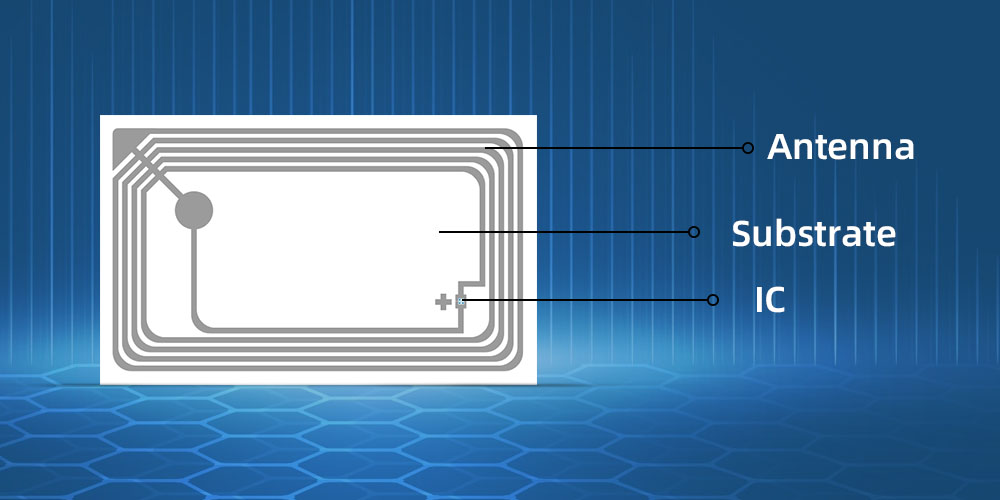
Criteria for selecting UHF RFID chips
When choosing UHF RFID chips, you need to consider the following factors:
- Reading distance: The distance at which the reader can read the card.
- Read speed: The speed at which data is transferred between the card and the reader.
- Memory: The amount of memory available for storing data.
- Security: Security features to protect data.
- Cost: The cost of the RFID chip and system.
- Application: The intended use of RFID tags will determine the most suitable chip selection.
The differentiating factor between different types of chips
In addition to the major manufacturers, UHF RFID chips also differ in the following ways:
- Operating frequency: Although operating in the UHF band, chips can have different specific operating frequencies, affecting reading range and speed.
- Size: The size of the chip affects the size of the RFID tag.
- Power consumption: The power consumption of the chip affects the battery life in active RFID tags.
- Special features: Some chips have special features such as shock resistance, water resistance, or integrated additional sensors.

Applications of UHF RFID tags
UHF RFID tags have numerous applications in modern life, including:
- Warehouse management: Tracking goods, controlling inventory.
- RFID core: Integrated into products to combat counterfeiting and control quality.
- Access control: Controlling entry and exit, identity authentication.
- Contactless payment: Payment using RFID cards.
- Asset tracking: Monitoring the location of assets.
- Healthcare industry: Patient management, monitoring medical equipment.
- Production: Managing the production process, tracking components.
Share:


