


Classification of commonly used QR codes today
QR codes have become commonplace in our modern lives. We frequently use them for payments or accessing information from brands. But do you fully understand QR codes? What exactly are they, and what types are currently available? Let's explore the popular types of QR codes with SINO.

What is a QR code?
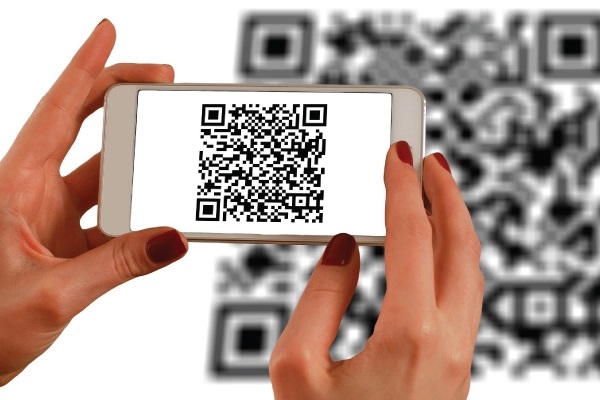
A QR code is a type of two-dimensional (2D) barcode, short for Quick Response Code, that can be scanned with a smartphone or special barcode reader to quickly access encoded information. QR codes are created from black and white squares arranged in a specific pattern, containing richer information than traditional barcodes.
QR codes first appeared in 1994, developed by Denso Wave (a subsidiary of Toyota). These QR codes can contain information such as URLs, times, event locations, descriptions, and product information. Their convenience and speed of scanning have made QR codes a popular and useful tool.
The history of QR code development:
– Invented by Denso Wave of Japan in 1994, initially for tracking components in automotive manufacturing,
QR codes have since been widely adopted due to their ability to store and access information quickly.
Types of QR codes currently available
Currently, there are two main types of QR codes: static QR codes and dynamic QR codes.
Static QR codes store fixed information that cannot be changed after creation. This type of code is suitable for displaying simple information such as website URLs, contact information, images, and videos. Created for free and easily through many online tools, static QR codes are suitable for a wide range of uses.
Dynamic QR codes allow for the storage of information that can be changed after creation. This type of code is very flexible because you can update the content without creating a new one. It is suitable for information management and marketing campaigns due to its ability to track visits, collect customer data, and analyze campaign effectiveness. Dynamic QR codes also enable new interactions such as providing discount codes, gift vouchers, or exclusive content, saving costs with multi-purpose use from a single code.
A comparison between QR codes and traditional barcodes reveals a clear difference:
Traditional barcodes
– One-way information storage: Barcodes contain information in one direction and usually only include numbers or letters.
– Limited storage capacity: Older barcodes only store a few dozen characters.
– Limited information readability: Requires a specialized scanner and is easily affected by environmental factors such as light and location.
– Low interactivity: Does not allow user interaction.
QR Code
– Two-way information storage : QR codes store a variety of data such as text, links, images, and videos.
– Large capacity: Can contain thousands of characters of information.
– Easy to read: Scanned with a smartphone camera, good resistance to environmental factors.
– High interactivity: Leads to websites, shares contact information, or provides exclusive content.
QR codes also offer other advantages such as their compact size, ease of creation and use with many free tools, and lower cost compared to traditional barcodes.
The unique advantages of traditional barcodes
– Easily recognizable : Widely used and familiar to many people.
– Scanning requires no special equipment : Can be read with the naked eye.
The choice between QR codes and barcodes depends on the specific purpose.
The role of QR codes in the digital age.
– QR codes are becoming increasingly popular, offering numerous benefits to both users and businesses.
– They allow quick access to information without manually entering URLs.
– Businesses can provide product, service, and promotional information via QR codes.
– They reduce printing costs, track marketing campaign effectiveness, and lighten the workload for customer service departments.
Overall, QR codes are a more advanced technology and are widely used in modern life.

Structure and operation of QR codes
The structure of a QR code includes:
– Finder Pattern: Three large squares at the corners of the code help locate and define its size.
– Alignment Pattern: Two small squares below the finder pattern help adjust for distortion.
– Timing Pattern: Alternating black and white squares on either side identify the version and error correction level.
– Data Area: The majority of the area containing the encoded information, which could be text, URLs, images, or videos.
– Quiet Zone: The area surrounding the code that distinguishes it from its surroundings.
How QR codes work:
1. Scan the code: Use the camera to take a picture of the QR code.
2. Decode the image: Process the image to identify the black and white squares and arrange them according to the code pattern.
3. Convert the data: The encoded data is converted into a readable format such as text, URL, image, or video.
4. Display the information: The decoded information is displayed on the device screen.
Some notable features of QR codes:
– Capable of storing large amounts of information, up to thousands of characters, far exceeding traditional barcodes.
– Error-correcting capabilities help maintain accuracy even when damaged or distorted.
– Easy to create and use through various online tools and free applications.
Diverse applications in daily life:
QR codes are used in many fields, such as:
– Marketing and sales: Promoting products, services, and promotional programs…
– Payment and transactions: Online payments, money transfers, shopping…
– Information and data management: Tracking products, customer information, inventory data…
– Entertainment and education: Accessing videos, songs, learning materials…
– Production and manufacturing: Tracking products, managing production processes…
The future of QR codes:
With technology constantly evolving, QR codes will become smarter, offering more diverse interaction possibilities for users and are expected to continue to thrive in the future.
Share:


