


Classification of RFID bracelets and practical applications.
RFID bracelets are becoming increasingly popular and have many applications in modern life.
What is an RFID bracelet?
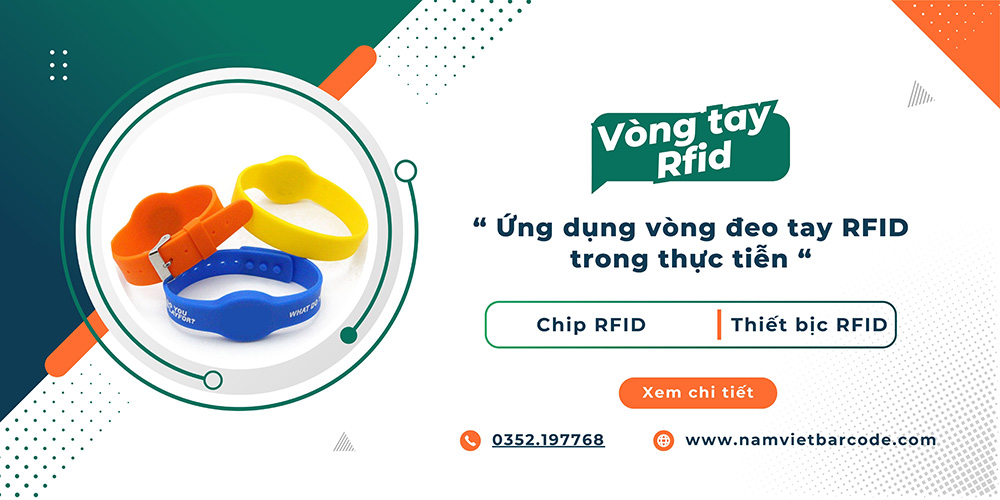
An RFID (Radio Frequency Identification) bracelet is a device worn on the wrist that incorporates an RFID chip and a small antenna. This chip is capable of storing information and transmitting data wirelessly to RFID readers.
Operating mechanism
- RFID chip: This is a memory device that stores information, which could be a code, personal information, or any other data.
- Antenna: This component helps transmit and receive radio signals between the chip and the reader device.
- RFID reader: When the bracelet passes through the reader's scanning area, a radio signal activates the chip and data is transmitted.
Advantages of RFID bracelets
- Convenience: Simply bring the bracelet close to the reader device, and the data will be transmitted quickly and accurately.
- Security: Information is encrypted, ensuring a high level of confidentiality.
- Time saving: Automated verification and authentication procedures save time and manpower.
- Versatile applications: Can be used in many different fields, from access management and payments to health tracking.
Applications of RFID bracelets
- Access management: Controlling access to restricted areas, events, and buildings.
- Payment: Pay quickly and conveniently at stores, restaurants, and events.
- Health monitoring: Measure heart rate, count steps, track sleep.
- Identity verification: Verifying identity at events and airports.
- Asset management: Tracking assets within companies and warehouses.
- Employee management: Monitoring working hours, tracking employee locations.
Types of RFID bracelets
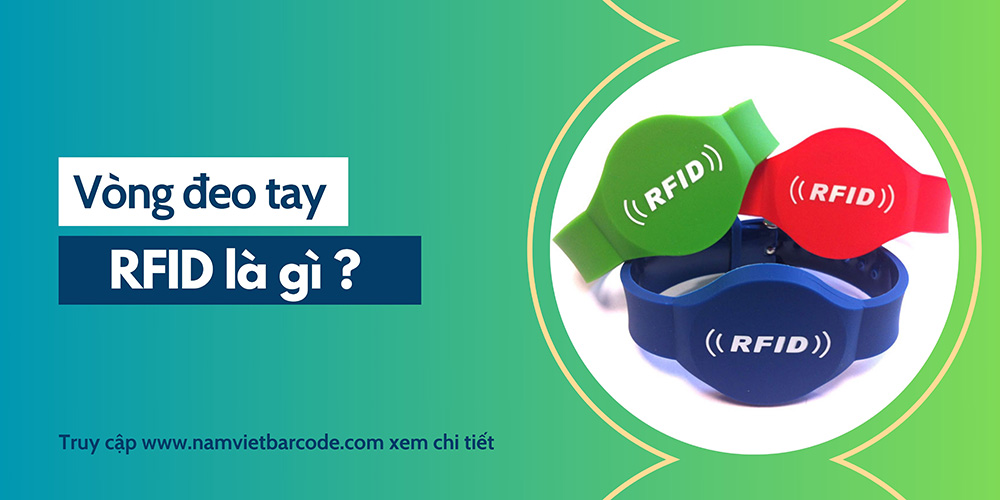
RFID (Radio-Frequency Identification) wristbands are compact devices that integrate radio frequency identification technology. They are widely used in many fields, from event management and access control to goods tracking. Below are some common types of RFID wristbands along with illustrative images:
- Classification by operating frequency:
- LF (Low Frequency) RFID bracelets: Operate at low frequencies (125kHz), commonly used for simple applications such as access control and hotel room cards.
- HF (High Frequency) RFID bracelets: Operate at a higher frequency (13.56MHz), capable of storing larger amounts of data, and are widely used in contactless payment systems and complex access control systems.
- UHF (Ultra High Frequency) RFID bracelets: Operate at very high frequencies (868MHz or 915MHz), capable of remote reading, commonly used in inventory management and asset tracking applications.
- Classification by material:
- Paper RFID wristbands: Often used for one-time events, they are inexpensive and easily biodegradable.
- Plastic RFID bracelets: More durable than paper bracelets, available in a variety of colors and styles.
- Silicone RFID bracelets: Soft and comfortable to wear, commonly used in sports and healthcare.
- Fabric RFID wristbands: Can be printed with custom logos and images, often used for brand events.
- Metal RFID bracelets: Durable, withstand harsh environments, but are more expensive.
- Classification by function:
- Passive RFID bracelets: They have no power source of their own and only become active when in contact with a reader.
- Active RFID bracelets: These have a built-in battery and are capable of transmitting signals, allowing for remote reading.
Share:


