


Comparison of RFID and QR Code technologies in warehouse management.
What do RFID technology and QR codes have in common?
- Both of these technologies are widely used for asset management and inventory tracking.
- RFID and QR codes are two asset tracking methods used to identify and collect information. Information entered and stored on QR codes and RFID tags can be read by other devices.
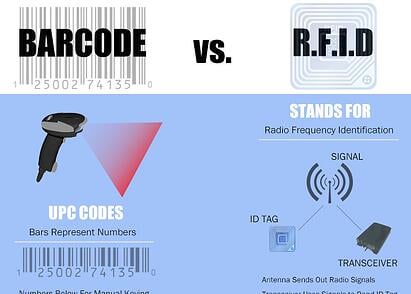
The difference between RFID and QR code applications in warehouse management.
| Compare | RFID | QR code |
| Reading method | Radio waves | Optical scanner |
| Line of sight | No need | Have |
| Scanning device | Use specialized equipment such as Handy/Zebra machines… | Use your iPhone or Handy device to read the QR code. |
| Reading distance | Long reading distance (from 0.5 – 30m) | Close reading distance (1m) |
| Ability to read barcodes when the barcode is obscured. | Scan/read all barcodes within the signal range, regardless of obstruction. | Barcodes can only be scanned/read within the device's field of view (within the scanning area). |
| Reading speed | It can scan and read multiple cards at once at high speed. | Only one code can be read at a time during each scan. |
| Accuracy | Poor signal transmission occurs when passing through metal or liquids. Reader head collisions occur when two overlapping signals are close together, and the card cannot respond to either.
Errors can occur if the RFID tag is faulty/damaged. |
High accuracy |
| Investment costs | The high cost is due to the need for businesses to invest in additional RFID tags and specialized equipment. | Lower investment costs (investment in QR code readers and printers) |
| How to receive/deliver inventory | RFID readers are typically installed at warehouse doors. As products pass through the warehouse, the RFID reader scans all RFID tags attached to the products, even if they are not visible. The collected data is then directly transmitted to a server for verification, comparing inventory levels and generating new inventory receipts. From this point on, products are managed via their attached RFID tags. | When receiving or dispatching goods from the warehouse, the warehouse manager uses a handy device (integrated with warehouse management software) to scan the codes on the boxes/pallets. The information is then connected to the software to automatically generate goods receipt/delivery slips. |
| Inventory check | Thanks to its ability to read large quantities accurately, RFID enables warehouse staff to easily conduct efficient inventory checks, saving up to 50% of inventory time compared to traditional methods. | Inventory staff check each item by scanning its QR code. |
| Traceability | Traceability | Traceability |
Should businesses choose RFID or QR Code applications for warehouse security?
To answer the question of whether to use RFID or QR codes in inventory management, businesses must first understand the features, benefits, and limitations of each technology. Additionally, you need to have a clear understanding of your warehouse situation and investment costs, and consult with experts to assess potential cost increases, workload adjustments, and efficiency improvements based on your business performance.
Share:


