


Essential Principles to Consider When Choosing Barcode Printer Ribbons
Barcode ink or ribbons are used in the printing industry for 1D, 2D, and QR code barcode labels for products and services in manufacturing, retail, or for easy information management, quantity control, and inventory tracking. Each barcode printer has different sizes and print widths, so not all ribbons are compatible. Therefore, choosing the right ink and ribbon is crucial to avoid mistakes and ensure optimal use for your label printing needs.
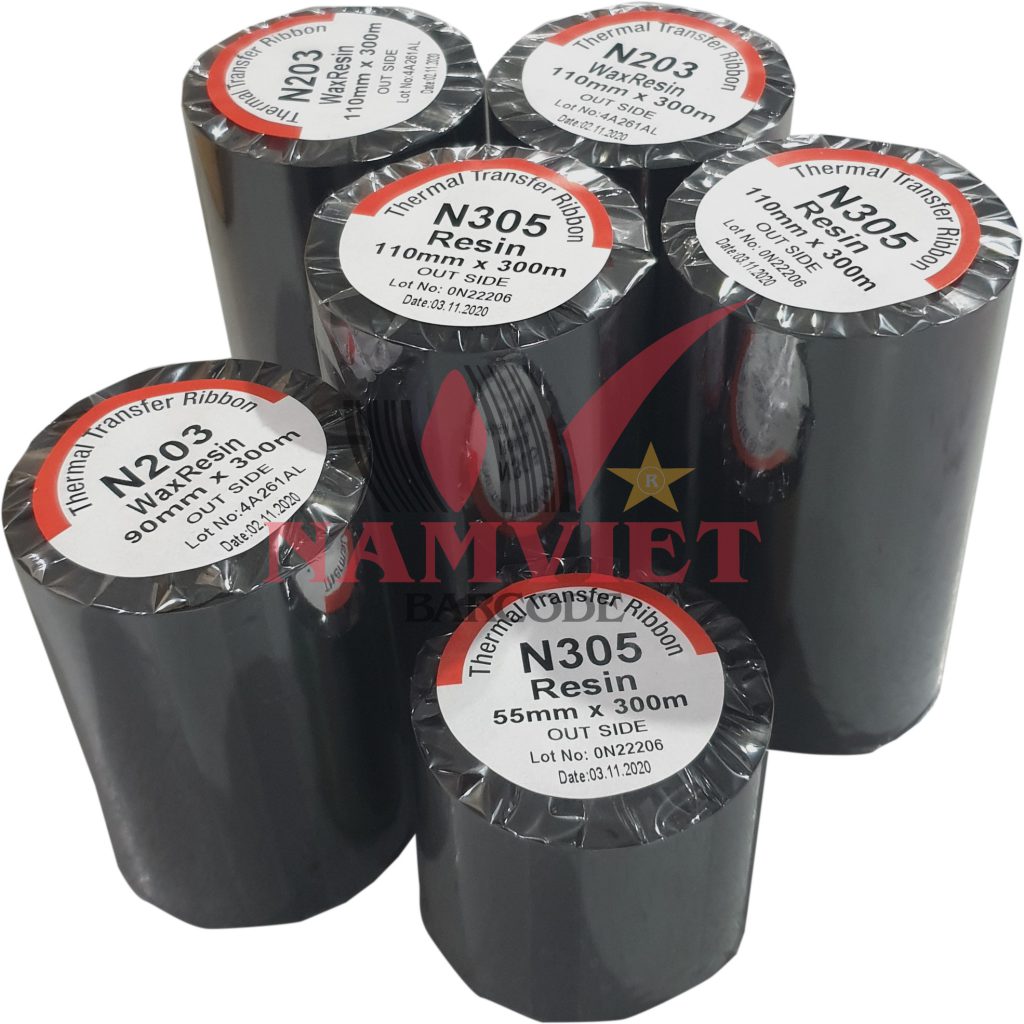
The following important points should be noted:
- Ink size compared to barcode printer size
- Ink roll material
- Ink core diameter and roll length
When you hold a roll of barcode ink in your hand, information such as the manufacturer, ink material, size, and color will be provided on the outside of the ink container or on the plastic film surrounding the roll.
Some well-known manufacturers offer high-quality ink, such as Toshiba and Ricoh , using basic materials like Wax, Wax + Resin, and Resin . The maximum length of barcode ink rolls currently in use is typically 300m .
Ink roll size compared to barcode printer size
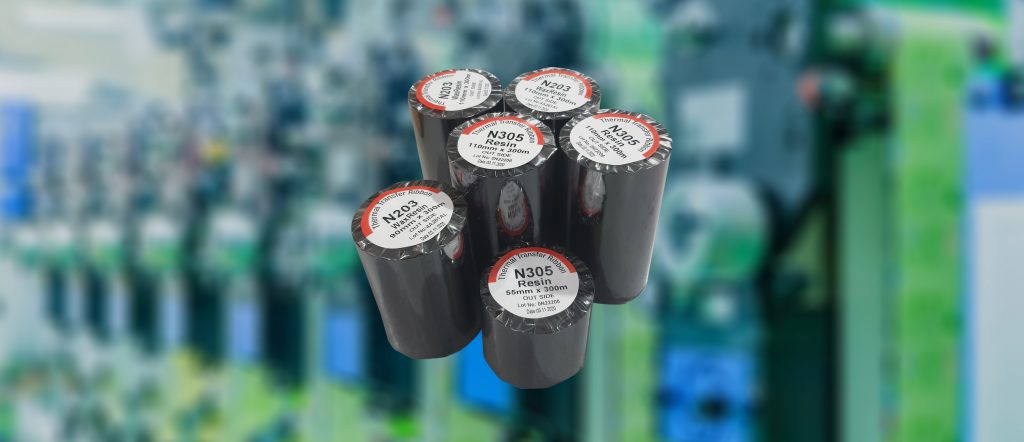
Ink roll sizes
Ink roll dimensions: WIDTH X LENGTH : 110mm x 300m, 104mm x 300m, 130mm x 300m…
Ink roll WIDTH:
The width specification determines whether the ink roll will fit into the printer. Typically, the chosen ink roll width should be smaller than or equal to the barcode printer's print width (ideally smaller).
What ink size is suitable for printing?
The paper size is usually roughly equal to the print head length.
The optimal ink pad size (width) is usually equal to or slightly smaller than the printer's print width by a few centimeters. For example, the B-EX4T1 printer, which has a paper width of 120mm, can effectively use ink pads with a width of 110mm or 104mm.
What happens if the size isn't the correct print size?
If the ribbon width exceeds the paper size, the ribbon will wrinkle or the ink color will be uneven when printed, resulting in areas of varying darkness or smudging.
Using ribbons that are too narrow for the print size is wasteful because it requires using a printer with an unsuitable print size, resulting in higher electricity consumption, a higher risk of misaligned labels or ink, or, more seriously, damage to the print head.
The problem arises when printing labels that are smaller than the print size.
When printing small-sized labels, barcode printers can solve the problem thanks to a new function integrated into the latest generation of TOSHIBA printers: Ribbon Save mode – maximizing ink savings.
Ink core diameter and roll length
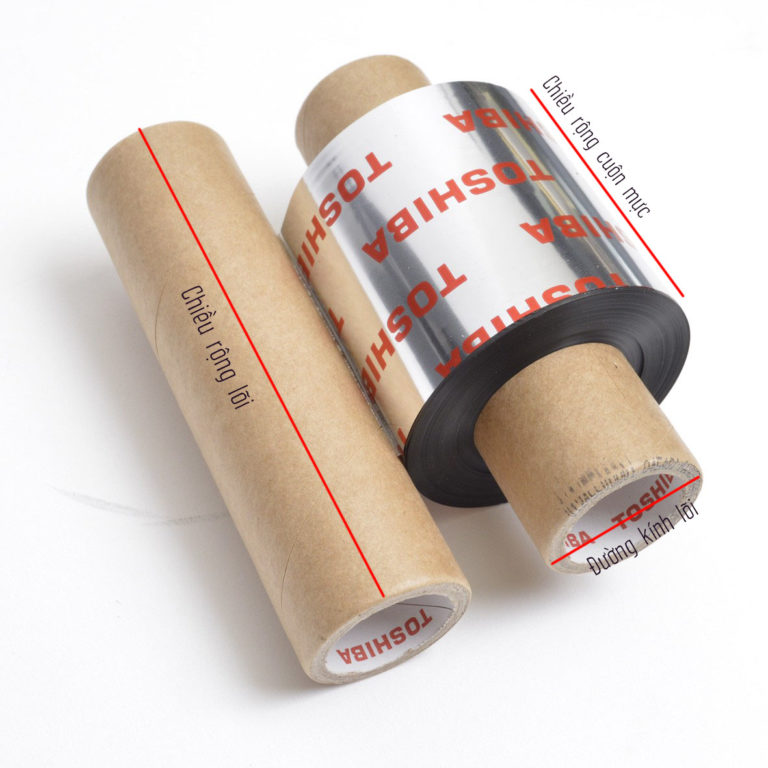
Each barcode printer will have its own specified core diameter, core length, and ribbon length.
Does the ink cartridge core diameter allow for use with the printer being used? The ink cartridge core diameter greatly affects the ink loading process and the quality of the printed image, and ensures that the print head is not scratched by transmitting high or low friction force to the print head.
Each ribbon roll has a standard length of 300m. Depending on the quantity and size of labels to be printed, the ribbon roll will need to be replaced more or less frequently.
For example, printing labels measuring 40x30mm with a 130mm x 300m ink roll will yield approximately 25,000 labels of that size (3 labels per row plus spacing between rows).
Ink roll material
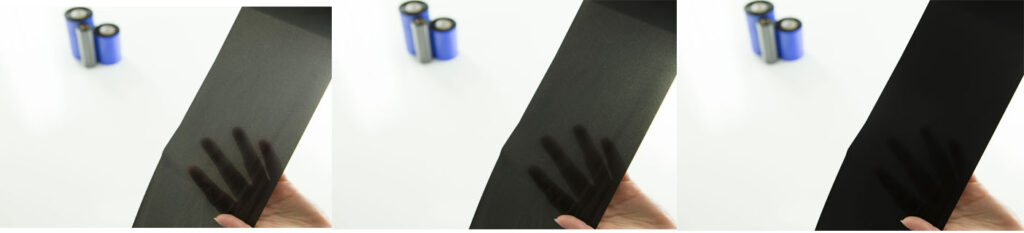
Barcode printing ribbons come in a wide variety of materials, but there are three main and most common types:
- Wax: the cheapest wax material widely used for printing barcode labels for products used in normal shaded environments or for short periods.
- Wax-Resin: a composite material of wax and resin with higher durability and longer lifespan, commonly used for chemical products, cosmetics, outdoor applications, freezing, etc.
- Resin: a highly durable plastic material that is very difficult to peel or chip, suitable for applications involving frequent contact with water, solvents, chemicals, friction, or high temperatures.
Buy genuine barcode printer ink from reputable sources to protect your print head and ensure the best print quality.
Using low-quality barcode ink can scratch or damage the print head. Replacing the print head is often very expensive, so it's essential to buy high-quality ink to minimize risks, ensure the printer lasts longer, and save your company on repair and replacement costs.
Share:


