


Flexo barcode label printing technology is currently the most popular.
Flexographic barcode printing technology is widely used by printing companies due to its advantages. However, consumers who need to print posters are not very familiar with this technology. Below is some basic information on how to operate and use it.
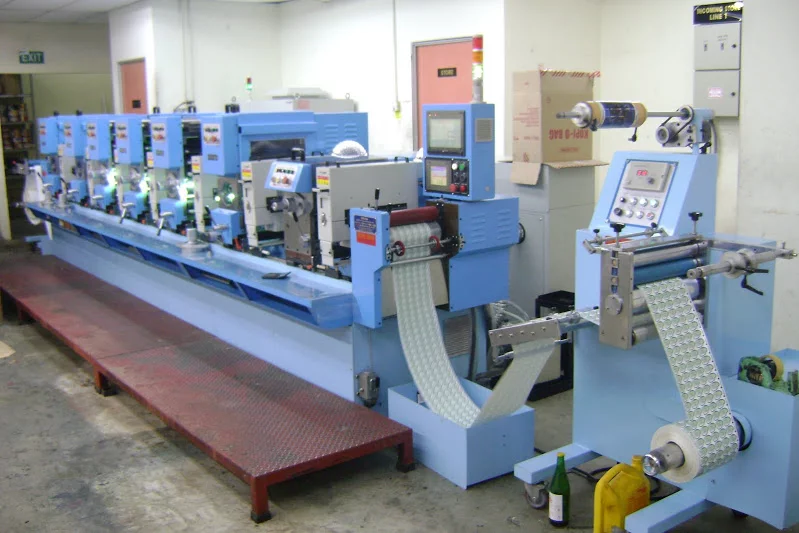
1. Outstanding advantages
1.1 High color uniformity, uniformity on a large scale.
Flexographic printing technology allows for precise color mixing and high-quality prints. Additionally, flexographic inks dry faster. Therefore, after synchronizing colors and designs, you can print more labels at a lower cost, saving you considerable time.
1.2 Flexographic barcode printing technology is cheaper when printing in large quantities.
When printing in small quantities, digital printing is often cheaper and requires less setup costs, but it is slow. Therefore, printing large quantities of labels using digital methods becomes very time-consuming and expensive. Now, we should use flexographic printing, a technology that is much faster thanks to multiple printing presses running simultaneously, regardless of label size or material.
1.3 Labels can be printed using metallic ink or metallic labels.
Some methods, such as digital printing, are often limited to 4-color printers and are not compatible with metallic inks. Even if you can overcome this by printing onto metallic labels using a digital printer to give the labels a luxurious look, this can lead to costly additional assembly work. Therefore, metallic labels and metallic inks are best printed using flexographic printing.
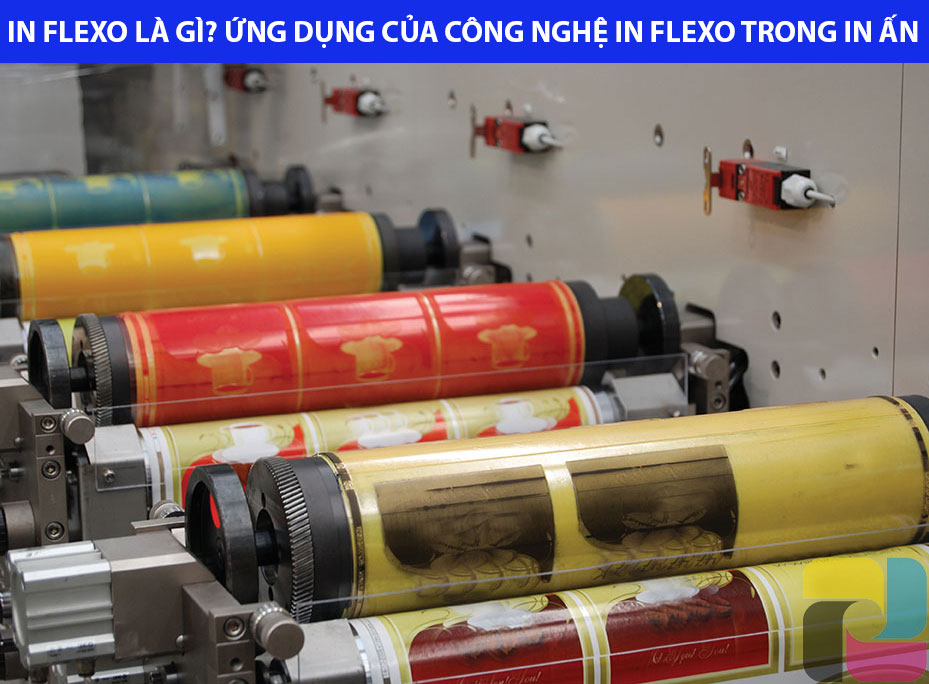
2. Materials and tools for Flexo printing
2.1 Flexo Printing Machine
Flexographic printing machines come in two types:
- Stamping type printing
- Roller printing type.
Stamping printing typically produces low-quality, average-sharpness prints. Roller printing is more expensive but delivers higher-quality, sharper prints.
2.2 Flexo Printing Plates
Printing can be done using photochemical methods, CTP, or laser engraving, after which the printing plate is attached to the cylinder using double-sided tape or magnetism. The choice of printing plate includes the thickness, number of layers, and stiffness of each material such as foil or cardboard, so we select the appropriate plate for the printing process.
2.3 Barcode Labels
When printing labels on a Flexo machine, roll paper or wound roll paper is commonly used. To protect barcode labels from humid environments, frequent contact with materials and high temperatures, especially in optimal conditions, materials made from PVC or polyester are recommended.
2.4 Ink
For barcode printers, we apply toner powder to the PE film and then wind it onto a roll. Basically, flexographic ink comes in three forms:
- Organic solvent-based ink
- The solvent used in printing ink is water.
- UV ink
2.5 Cutting blades
This is the final step before the product is shipped, ensuring it has a beautiful appearance and fits the design perfectly.
In many modern printing systems, Flexo label printing technology is still being implemented by many large printing companies due to its convenience and superior product quality. With Nam Viet Group, you will have similar options for your business barcode printing service.
Share:


