


Flexographic printing | The most popular label and tag printing technology today.
Flexographic printing, currently one of the most popular printing technologies, especially its flexible printing techniques, is increasingly proving its place in the printing industry. For a more detailed analysis of the operating principles and basic processes of flexible printing, please see the article below:
Flexographic printing principles
Raised printing using photopolymer plates is done digitally or analogally. Ink is supplied to the printing plate via an anilox roller. The anilox roller is a metal roller containing thousands of ink holes partially immersed in an ink tray. Ink particles are deposited in the ink holes on the anilox roller. To avoid excess ink, manufacturers use a doctor blade to remove it. The anilox roller contacts the printing plate, and the ink is transferred from the anilox roller to the plate. The printing press then presses the plate onto the surface to create the image. Flexographic printing is commonly used for printing catalogs and other materials, producing excellent quality results.
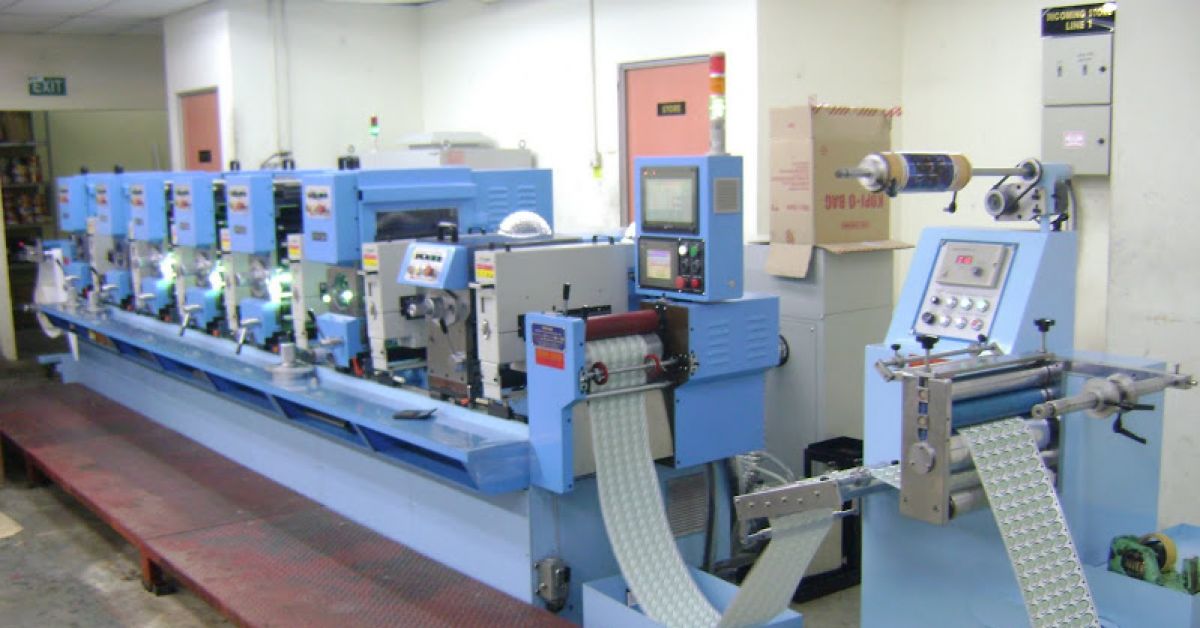
Flexographic printing principles
Basic flexographic printing structure
A basic printer will have the following main features:
Metering Roller : A cylindrical roller partially submerged in an ink trough, its function is to transfer ink from the trough to the anilox roller, also known as the light metering roller.
Anilox Roll is a metal roller with a convex and concave surface engraved with numerous small holes that serve as ink reservoirs. As ink is pushed out of the ink reservoir, ink droplets collect in the ink holes on the anilox roller.
Doctor Blade: To prevent excess ink from adhering to the anilox roller surface and causing ink buildup, a doctor blade is used to wipe away any ink residue. These ink wipers are made of steel or polymer.
Plate Cylinder : Made of rubber, this cylinder securely attaches the printing plate to a surface using adhesive tape, magnets, or locking pins.
Flexographic Printing Plate: The printing plate is made of photopolymer plastic. Printing can be done using photochemical, CTP, or laser etching methods. The thickness, stiffness, or elasticity of the printing plate depends on the printing material.
Impression Cylinder: The pressure cylinder is made of rubber. Its function is to press the surface of the material to be printed onto the printing plate's cylinder to transfer ink from the printing plate to the printing surface.
An ink tray is a tray for holding ink.
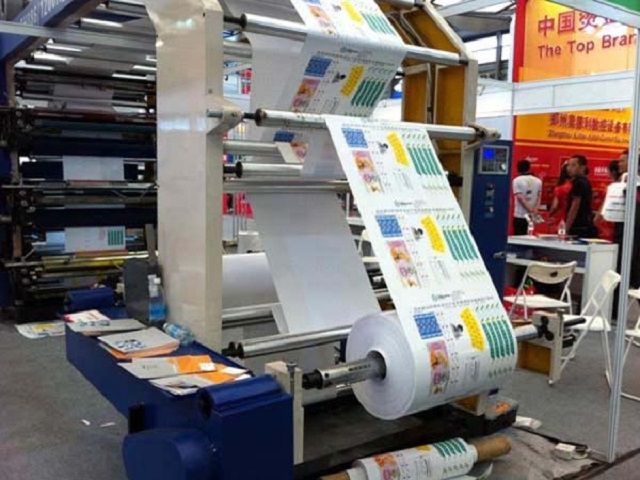
A basic flexographic printing system includes the following steps:
Processing print files
For flexographic printing products to be scalable and wear-resistant, processing and calculations are essential. Prepress involves a system of file formats, page layout, page arrangement, and CMYK color matching. Special rendering tools such as Corel Draw, Illustrator, Adobe Acrobat, etc., and the final files are often used to create films in PDF format.
Output movie
In this process, we will use CTF technology where digital data from a computer is converted into analog data and video from film footage. This type of film typically has four screens representing the colors C (cyan), M (magenta), Y (yellow), and K (reverse). These films will be in black and white.
Exposing flexographic printing plates
After the films are removed, they are bonded and molded using zinc plates. A zinc plate attached to this film is then placed in a zinc blasting machine. Depending on the photochemical principle, parts without the printed material will corrode. The print will fail to fit or will damage some parts.
Share:


