


How to distinguish between NFC and RFID?
Most of us confuse two major technologies: RFID and NFC. Although similar in many ways, there are some key differences between the two. Let's explore the differences between NFC and RFID below:
How is NFC different from RFID?
RFID and NFC share many similarities, but there are also some clear contrasts. The main difference between the two technologies is the amount of information they can collect.
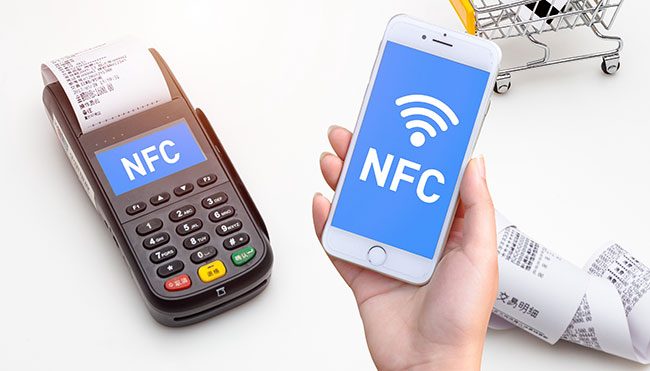
Near Field Communication (NFC) is only about 4cm (most phones).
Radio Frequency Identification (RFID) uses radio waves and antennas to maximize readable data. RFID also comes in two types: passive and active tags.
1. Energy:
NFC uses the phone's power to read data added to a tag or label. RFID tags can be passive or active, as described above. This means RFID tags will be used to transmit data.
For systems that read data from NFC and RFID tags, RFID devices will use slightly more power as they operate the antenna system, and depending on how the RFID system is configured, the settings being read and the tags continuing to transmit data will increase the system's power consumption.
2. Costs:
NFC technology is generally a cheaper solution, as no additional technology is required if you use it for advertising or informational purposes (the cost of the reader is on the customer's phone).
On the other hand, RFID can be a perfect tracking solution for assets, equipment, shipping containers, etc. Therefore, the choice of RFID labels and tags is very diverse. Active RFID tags, encased in hard plastic, metal, or rubber housings, can range from $3 to $18, depending on the variant. This means that this type of tag is often used to track expensive items.
3. Capacity:
This isn't really a question worth asking, because RFID and NFC have two very different uses. RFID tags typically store tracking numbers or serial numbers, allowing us to track individual products using their unique codes. This is the case when a large amount of tag memory is required.
4. Security:
Due to the nature of the information stored on RFID tags, this can be a safer option, because if someone could hack and collect or modify the information on the tag, they would only change some information on the SKU (product tracking number). While this might be a problem for some companies, it's not a major issue.
On the other hand, NFC tags can be reprogrammed if they are not written correctly, meaning that if you find a brand or product with a logo that is not clear enough to be read-only, replace that tag with an NFC application, such as an Easivaiv NFC device.
5. Internet speed:
Due to its short range, NFC data is sent quickly, but if an RFID tag is activated hundreds of meters away, it may take a while for the data to reach the reader.
6. Scope of operation:
RFID is perfectly suitable here. RFID tags have their own power source, meaning their range can be up to 100 meters or more. Although NFC has a range of about 4cm.
Depending on the frequency of the RFID system used, this affects the coverage area. Below are some approximate ranges for different frequencies in RFID.
- Low frequency (125-134 kHz) – up to 10 cm
- High frequency (13.56mHz) – up to 30cm
- Ultra-high frequency (from 856 MHz to 960 MHz) – up to 100 m
Share:


