


Manage pallets and containers quickly using RFID.
Previously, the use, operation, and tracking of pallets and containers in logistics were based on intuition and paperwork. Now, RFID technology can be applied to manage pallets and containers, increasing the speed, accuracy, and efficiency of operations. Many companies rent pallets, containers, and even entire containers to reduce investment costs. However, due to the diversity of product materials and the increasing scale of distribution and warehousing, the demand for various types of containers is growing, and losses are also increasing, leading to higher management costs. Managing the rental and recovery of these assets has become a challenge for companies providing rental services. By applying RFID technology, the management and tracking of pallets and containers will become more convenient and accurate. So, what are the advantages of RFID ?
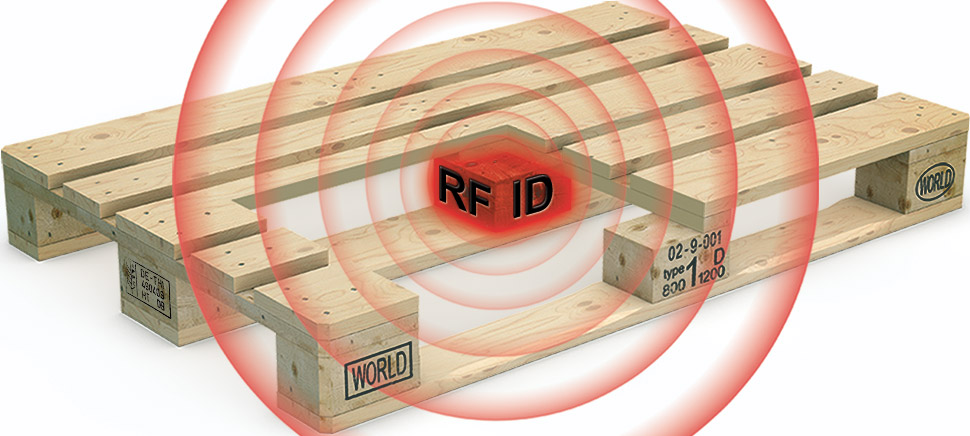
The advantages of RFID technology in asset identification and management.
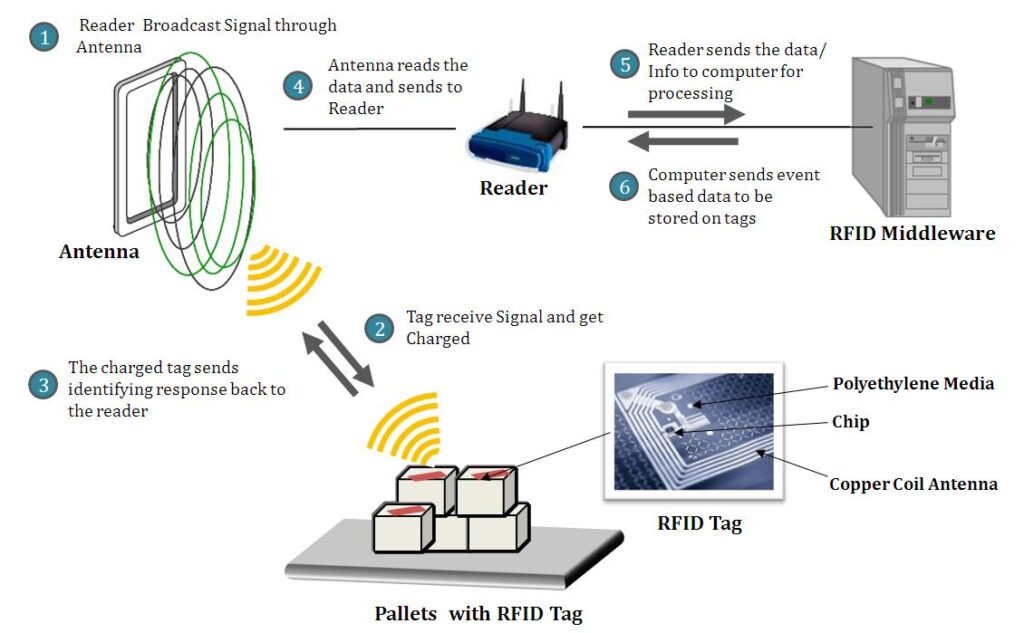
Implementing RFID technology allows for continuous tracking of pallet location and status. This reduces manual tracking labor, improves work efficiency, enhances supply chain transparency, lowers costs, and improves data accuracy. Furthermore, RFID helps leasing companies better manage large quantities of pallets and reusable pallets, preventing losses due to misplacement.
RFID technology can accelerate scanning speed, improve efficiency, and save labor costs in managing import, export, warehousing, and logistics distribution operations through automated reading. Unlike traditional barcode tags, RFID tags can be read and written multiple times, and the stored information can be serialized and modified. RFID tags provide a unique identification mechanism for each reusable container or pallet when read by an RFID reader, enabling real-time, transparent tracking of every pallet throughout the supply chain.
With the main advantages of using RFID technology being the ability to identify objects without seeing them, high durability, ability to withstand operation in harsh environments, contactless access (tags can be read from a distance of several meters), resistance to mechanical damage, and the ability to distinguish multiple tags present at the same time, information management using RFID systems in fields such as object management, personnel management, retail goods management in supermarkets, zoological and botanical research, goods management in factories or warehouses, vehicle management at toll stations, passport issuance, etc., has helped businesses:
- RFID tags reduce information costs because they can electronically store large amounts of information attached to objects. This information can be changed and updated at the point of use. In contrast, barcodes and electronic data interchange (EDI) between computers have several limitations: conventional barcodes are scanned by a reader and must be read continuously; barcodes cannot be changed once printed; and they are susceptible to dust and scratches.
- Accuracy is increased because RFID systems allow information to be stored instantly and wherever is most convenient.
- Updating state information by incorporating on-chip sensors has enabled them to collect data about the states they have experienced.
Trackify has extensive experience in deploying RFID technology applications in industrial production automation, for example, pallet leasing, industrial production control, automotive industry, food industry, and medical industry, etc. Trackify is capable of providing customized RFID tags for reusable plastic packaging such as GTL/SLC/KLT.
What types of RFID tags are commonly used for managing pallets and containers?
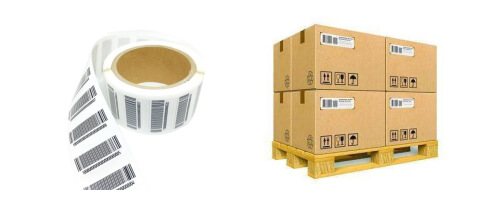
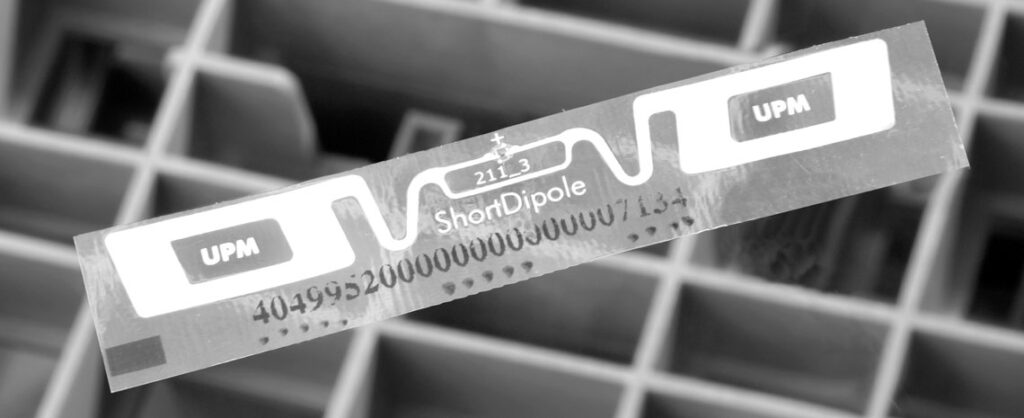
Paper Card - UHF RFID eKanban
- Cost: Economical because the cards are made of paper.
- Application: Stick onto pallets or shipping containers.
- Data can be printed on the card surface or written to a chip.
- Card thickness: 0.2-0.4 mm
- Card size: Can be customized according to the position and surface where the card will be attached.
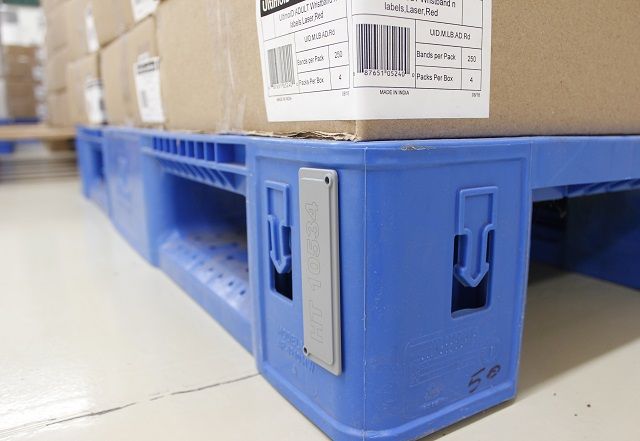
Indoor UHF RFID plastic tags
- Strong and durable
- Dustproof, waterproof, shockproof
- Data can be printed on the card.
- Multiple sizes to choose from.
- Install by screwing it onto the pallet or container.
Glossy PVC RFID tags
- Durable, impact resistant
- Installation method: Attach with adhesive or rivets.
- Card thickness: 0.8 – 1 mm
- Printing capability: Logos can be printed on the cards.
- Size: Optional
- Working environment: Waterproof, chemical resistant, cold/heat resistant, impact resistant
- Personalization: Data encryption using EPC
Share:


