


Overview of commonly used chips in Smart Cards
A smart card , also known as a smart card, is a type of plastic card that incorporates a microchip, allowing it to store and process information. This chip is the heart of the card, determining its functionality and security capabilities.
Chip classification by function
- Memory Chip:
- EEPROM (Electrically Erasable Programmable Read-Only Memory): This is the most common type of chip, used to store data such as serial numbers, personal information, fingerprints, etc. EEPROM can be erased and rewritten multiple times, but the number of write cycles is limited.
- Flash Memory: Similar to EEPROM but with faster read/write speeds and a greater number of write cycles.
- SRAM (Static Random Access Memory): Used as temporary memory; data is lost when the power supply is cut off.
- Microcontroller chip:
- 8-bit microcontroller: Commonly used in simple applications such as public transport cards and student ID cards.
- 32-bit microcontroller: Used for more complex applications requiring high computational power, such as bank cards and health insurance cards.
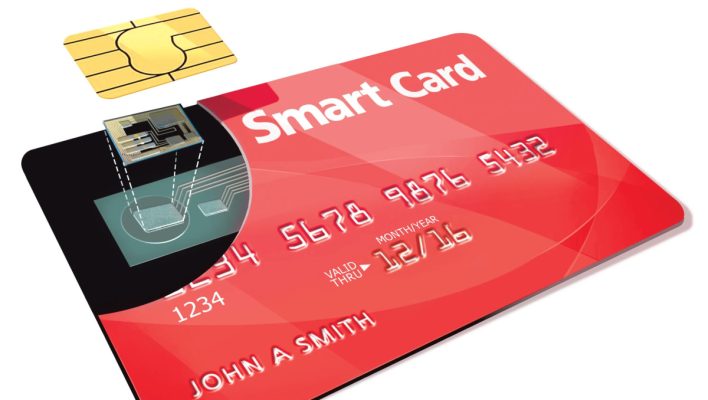
Chip classification by technology
- Contact Chip: Requires direct contact between the card and the reader to transmit data.
- Contactless Chip: Uses RFID (Radio-Frequency Identification) technology to transmit data via radio waves, without the need for direct contact.
Common chip standards:
- ISO/IEC 7816: An international standard for smart cards, including specifications for size, materials, communication, etc.
- EMV: A standard for card payment transactions, ensuring security and compatibility between banks.
Factors influencing chip selection
- Card applications: Each application will require different features and levels of security.
- Storage capacity: Depends on the amount of data that needs to be stored.
- Processing speed: Affects the time it takes to complete transactions.
- Security level: High requirements for financial-related applications.
- Cost: This is an important factor to consider.
Famous chip manufacturers
- NXP Semiconductors: Specializes in security solutions for smart cards.
- Infineon Technologies: Provides a wide range of smart card chips for diverse applications.
- STMicroelectronics: One of the world's largest chip manufacturers.
- Samsung: Provides chip solutions for various fields, including smart cards.
Summary:
Choosing the right chip for a smart card is crucial, as it directly impacts the product's performance, reliability, and cost. When selecting a chip, factors such as application, memory capacity, processing speed, security level, and cost must be carefully considered.
Share:


