


RFID cards are the most widely used types of cards today.
When designing an RFID system, the biggest concern is whether to use active (battery-powered) or passive (battery-free) RFID tags. Active tags offer several advantages over passive tags. Their signals are strong, travel long distances, and are undetectable by RFID readers, allowing them to continuously transmit information stored on the RFID chip. Additionally, active tags are more resistant to ambient electrical interference, making them suitable for areas with a lot of metal or for attachment to metal objects or liquids.

In recent times, RFID tags have been developed with new functionalities, such as by increasing their sensors, beyond simple ID information, recording and transmitting measured data such as time, temperature, or GPS coordinates. The main drawback of existing RFID tags is that they are expensive, bulky, and need to be replaced or charged after a certain period of use.
Passive RFID tags also offer superior features compared to active tags. More importantly, the initial investment cost of passive tags is significantly lower than that of active tags. Passive tags also have a longer lifespan, whereas the tag battery always needs replacing every two to three years, in addition to the cost of battery replacement and labor.
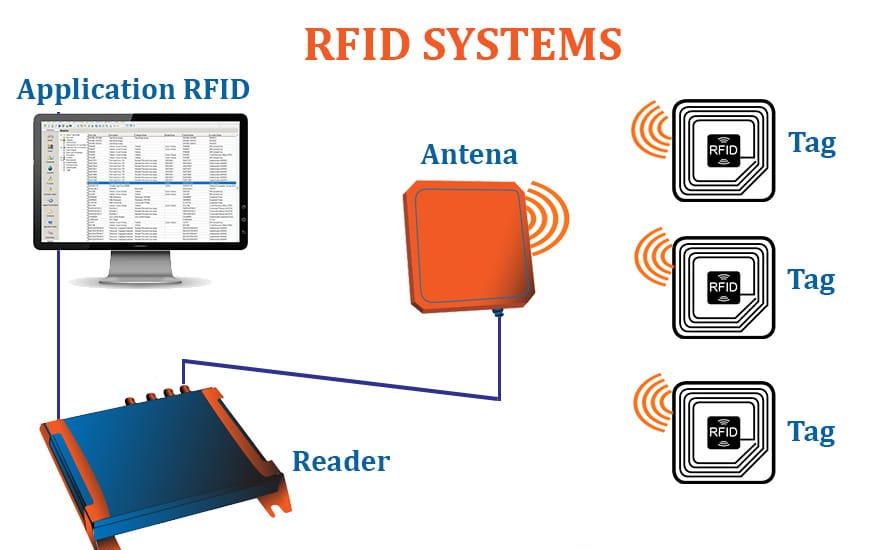
Another important difference between passive and active tags is the size of the tag. Passive tags are typically smaller than active tags, making them easier to use for items with less space. Additionally, passive tags are now available that can be placed on metal objects and liquids, with larger chip memory to store more information.
Because the overall investment and operating costs are much lower than those of active tags, passive RFID tags are the most commonly used tags today.
Share:


