


RFID IN FASHION AND GARMENT STORE MANAGEMENT
Many apparel and fashion companies are currently seeking solutions that can improve management efficiency, increase productivity, accelerate business growth, and provide customers with new and exciting shopping experiences.
Let's explore how RFID technology is applied in product management at fashion and clothing stores, and whether it truly delivers the results described or advertised.
The benefits of applying RFID technology to a fashion store's management system are not limited to what we see in the video above. Behind it lies a shift towards smarter, more scientific management, as well as increasingly faster and more accurate intervention from peripheral devices in the management process, providing comprehensive information for the business's operations. Let's look at some of the benefits of applying RFID technology with a hardware platform including long-range handheld inventory devices, also known as RFID readers, and long-range tags (UHF tags) used in the fashion and garment industry, along with an integrated software system:
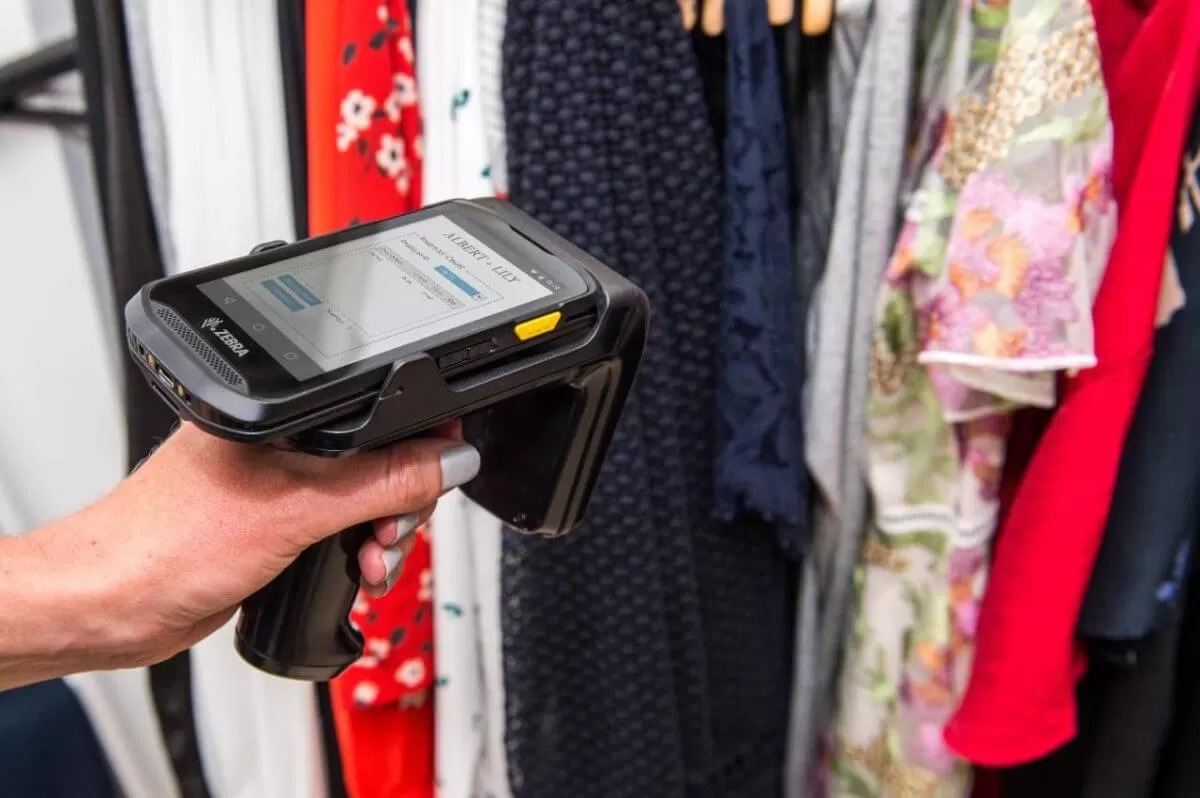
- Handheld RFID inventory counting devices allow us to quickly count products at a rate of 300-400 items per second with stable and accurate efficiency; this is impossible if we use barcode management or manual record-keeping.
- The remote inventory control device, integrated with software,allows for inventory checks by area within the warehouse. Additionally, it can detect and alert users to incorrect stacking data within the system, enabling timely adjustments to physical inventory levels to match the system data.
- Finding a specific product code in a warehouse, which is virtually impossible in practice with manual methods or barcode scanning, is no longer difficult if we apply technology using long-range inventory control devices. These devices have alert modes and can quickly guide users to the location of the product code they are looking for.
- One of the other benefits this system offers is the ability to continuously monitor inventory on shelves by area to ensure that shortages are compensated during the sales process (for example, a shelf needs to have a full stock of goods according to the categorized list; the sales process may lead to shortages of goods such as colors, styles, sizes of clothing, etc.). RFID devices permanently attached to the shelves will provide periodic alerts throughout the day and shift regarding the sales system at each shop, allowing for timely replenishment.
- Furthermore, diverse UHF tag solutions used in garment and fashion inventory management allow customers to rest assured that they can both support quick inventory checks and meet theft prevention needs through dual-chip tags (anti-theft chip and UHF chip for inventory control). Simultaneously, customers can optimize costs by continuously reusing UHF tags.

- An integrated payment solution using UHF card readers and RFID payment trays will also help stores solve the problem of speeding up customer payments, replacing barcode solutions and saving time and costs for both customers and cashiers. In particular, this solution will make the payment process less sensitive, as customers will not want cashiers picking out each of their items to process before other customers.
- Furthermore, RFID technology, when applied in fashion stores, also provides a very enjoyable shopping experience.
- One extremely important advantage, after all of the above, that we want to emphasize at the end, is the rapid and seamless connection of the system from warehouse, sales, payment, inventory, and reporting using only RFID-enabled peripheral devices. This allows business owners to accelerate the speed of all stages in their management process.
Share:


