


RFID tag reading capability is essential in production management operations.
One of the issues when choosing RFID tags is balancing the reading distance—the distance between the tag and the RFID reader to ensure optimal reading—with the size of the passive tag. Larger tags generally have a longer reading distance, and vice versa. The ideal reading distance is typically the allowable distance between the marked goods and the RFID reader's location when the system design and marketing are in operation.

For example, tracking a truck carrying goods using RFID requires RFID tags with a reading range of 6-10 meters or more. However, in a retail store or any environment with many items close together, a large reading range can cause signal interference, making it difficult to track products in one direction or another. If the products are close together, the RFID tag's reading range must be short for the system to function optimally; therefore, a reading range of 1-3 meters is sometimes appropriate.
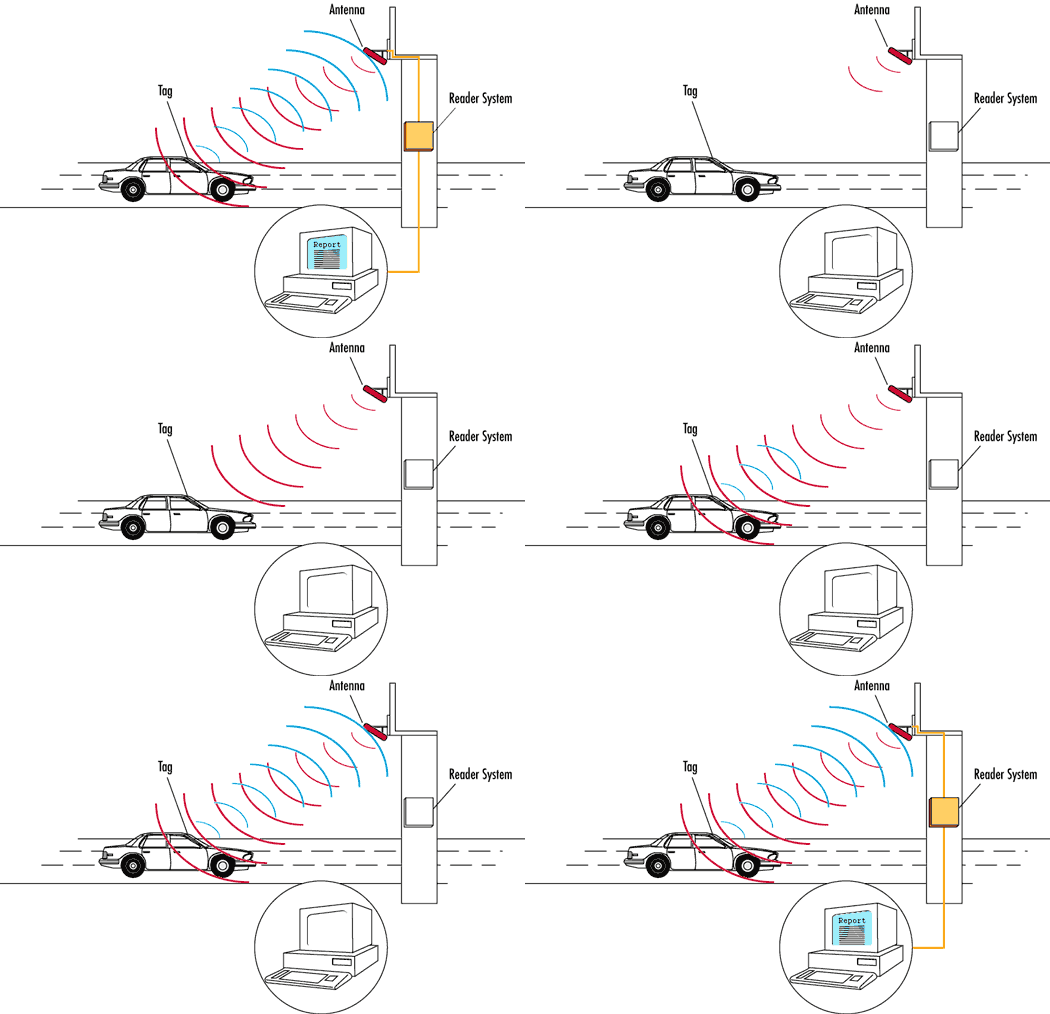
After selecting the reading range and tag size, another crucial decision is the electronic location where the RFID system will be installed. The electromagnetic properties of the product affect the performance of the RFID signal. For example, water-containing or metal objects significantly reduce RFID transmission, so standard passive RFID tags cannot be used; unique tags are needed for these items.
In short, the most important thing in the process is choosing tags that work well with all the things or devices you want RFID tags for. Fortunately, today, RFID tags vary greatly in size and material, how they are attached to products, and can be suitable for many different environments, such as cold environments, hot environments, etc.
Share:


