


RFID technology in manufacturing and logistics
In the era of Industry 4.0, asset management, inventory tracking, and production process optimization are more important than ever. RFID labels have emerged as an advanced solution, helping businesses improve operational efficiency. So what are RFID labels? This article will help you understand this technology, from its definition and characteristics to its basic industrial applications. At Nam Viet Group, we specialize in providing high-quality RFID label products, supporting Vietnamese businesses in their international integration.
What are RFID Labels?
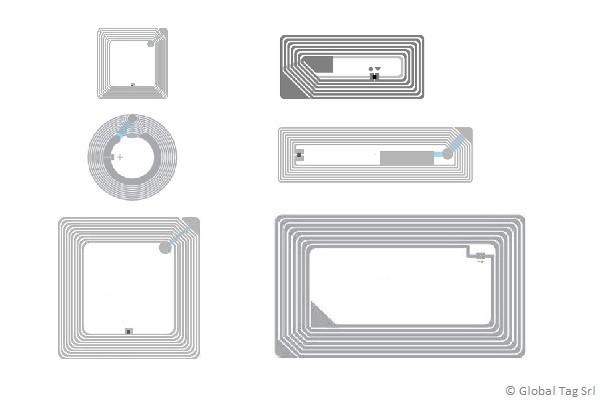
RFID (Radio Frequency Identification) labels are a type of smart label that incorporates an electronic chip and antenna, using radio waves to transmit and receive data remotely without physical contact. Unlike traditional barcodes that require direct scanning, RFID allows for rapid data reading over a certain distance. This technology comprises three main components:
- RFID chip: Stores information such as product code, manufacturing date, location, or custom data.
- Antenna: Helps the chip communicate with the reader via radio waves.
- RFID reader/writer: Sends a signal to activate the chip and collect data.
.jpg)
RFID was developed in the 1940s but only truly became popular in the 2000s thanks to decreasing costs and improved technology. According to reliable sources, RFID labels operate on the principle of transmitting information between the chip and the reader via radio waves. When the reader sends a signal, the chip responds with stored data. This makes RFID an ideal choice for harsh industrial environments where barcodes are easily damaged or difficult to read.
In Vietnam, RFID technology is widely applied in manufacturing, logistics, and retail industries. Nam Viet Group is proud to be a supplier of diverse RFID labels, from passive (battery-free) types to active types with longer reading ranges.
Key Features of RFID Labels
RFID labels possess many superior characteristics compared to traditional identification technologies, making them an indispensable tool in industry. Here are some of the key features:
- No Physical Contact Required: RFID can read data from distances ranging from a few centimeters to meters, depending on the frequency used (LF - Low Frequency: 125-134 kHz for short distances; HF - High Frequency: 13.56 MHz for medium distances; UHF - Ultra High Frequency: 860-960 MHz for long distances). This speeds up processing, especially in dusty or humid environments.
- Large Data Storage Capacity: RFID chips can store anywhere from a few bytes to several kilobytes of data, allowing for the addition of more information without replacing the labels. Furthermore, the data can be encrypted for security.
- Durable and Strong: RFID labels are typically made from heat-resistant, waterproof, and impact-resistant materials, making them suitable for industrial environments such as manufacturing plants or cold storage facilities.
- Diverse Classification:
- Passive: No battery required, draws power from the reading device, inexpensive and widely available.
- Active: Features its own battery, long reading range (up to 100m), suitable for monitoring large assets.
- Semi-Passive: Combines the advantages of the two types above, using a battery to power the sensor.
Integration with Other Technologies: RFID easily connects with IoT, AI, or ERP management software, helping to automate processes.
.jpg)
These characteristics make RFID labels superior to barcodes, reducing human error and increasing accuracy up to 99%.
Basic Applications of RFID Labels in Industry
RFID labels have diverse applications in industry, helping businesses optimize their supply chains and reduce operating costs. Here are some common applications:
- Warehouse and Supply Chain Management: RFID helps track goods in real time, from entry to exit. For example, in logistics, RFID tags attached to pallets or containers allow for quick scanning of entire shipments without opening the boxes. This reduces inventory time from hours to just minutes.
- Asset and Equipment Tracking: In the manufacturing industry, RFID is used to manage machinery and tools. Employees can easily locate equipment, preventing loss and increasing maintenance efficiency.
- Applications in Retail and Anti-Theft: RFID tags help automate inventory control and alert when goods are moved without authorization. In large stores, this technology reduces theft rates by up to 50%.
- Healthcare and Pharmaceutical Industry: Tracking medications and medical devices to ensure safety and regulatory compliance. For example, RFID helps check the expiration date of medications without opening the packaging.
- Smart Manufacturing: Integrating RFID into the production line to track each stage, detect errors early, and optimize resources.
.jpg)
Furthermore, in the transportation industry, RFID is applied to automated toll collection systems (such as ETC) or international container tracking. In Vietnam, many large enterprises such as Vinamilk and Petrolimex have adopted RFID to improve efficiency.
Benefits of Using RFID Labels
Using RFID labels offers many practical benefits:
- Save Time and Costs: Automating processes reduces the need for manual labor, saving up to 30% on warehouse management costs.
- Increased Accuracy: Reduced data reading errors compared to barcodes.
- Enhanced Security: Encrypted data prevents tampering.
- Extensive Support: Easily integrates with existing systems.
However, businesses need to consider the initial costs and employee training required for effective implementation.
Nam Viet Group - A Reputable RFID Label Supplier
As one of Vietnam's leading companies in industrial label printing, barcode ink, and RFID technology, Nam Viet Group is committed to providing high-quality products at competitive prices. We offer customized RFID labels suitable for all industries, from manufacturing to retail. With a team of experienced professionals, Nam Viet Group provides comprehensive RFID system consulting, installation, and maintenance services. Contact us for a free quote and solution!
RFID labels are not just a technology, but a key to sustainable industrial development. With their superior features and diverse applications, RFID helps businesses compete more effectively. If you are looking for a reliable RFID solution, Nam Viet Group is ready to partner with you. Implement it today to optimize your business operations!
Share:


