


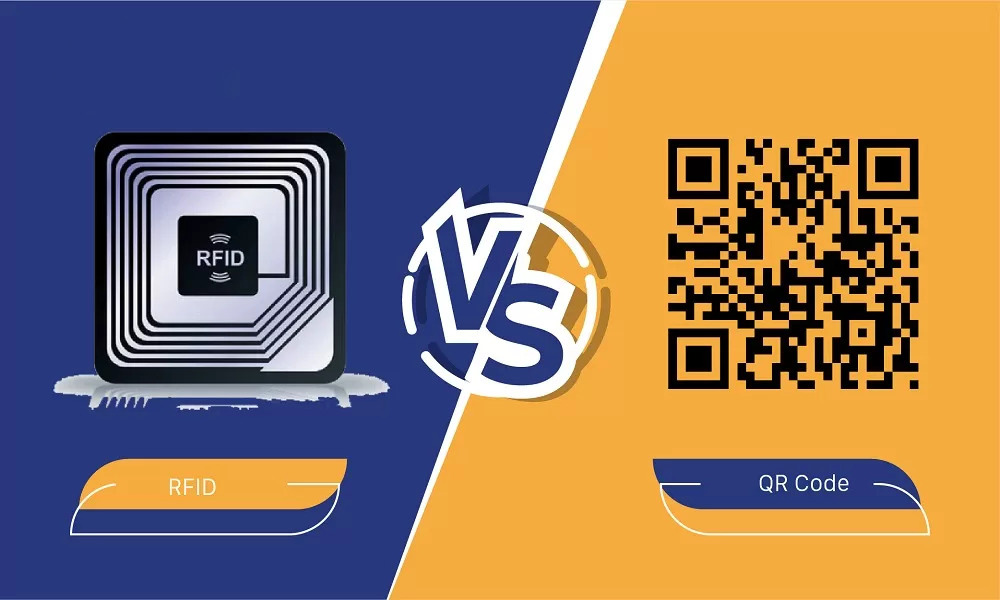
RFID vs. QR Code technology in warehouse management applications.
RFID and QR codes are two popular applications in warehouse management, but their technologies and functions are very different. Understanding the key differences between RFID and QR codes is crucial for choosing the right technology to ensure business success and improve return on investment (ROI).
Definition of RFID and QR code
What is RFID?
RFID readers were invented in 1980 by Charles Walton. RFID stands for Radio Frequency Identification. RFID technology uses radio waves. RFID has an interesting history. RFID was once used as a weapon against the Soviet Union during the Cold War. Today, RFID is used for managing large quantities of inventory.
How do RFID tags work?
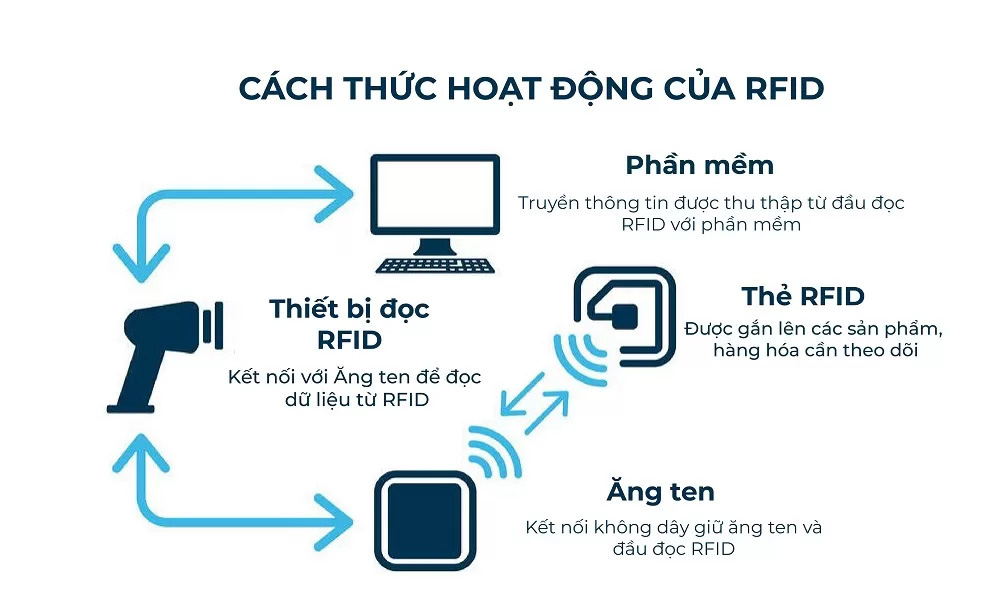
RFID tags absorb radio waves thanks to a microchip embedded inside the tag. These tags are attached to products and tracked. Each RFID tag has a unique, secure number that cannot be copied.
An RFID reader is a device equipped with an antenna that receives radio waves emitted by RFID tags. The RFID receiver allows for the reception of radio waves from RFID tags within a range of 0.5 – 30 meters. After receiving the data, it is sent directly to a server/software system and the information is stored there.
What are RFID tags used for?
In addition to product management applications, RFID tags have many other uses. They are often attached to company vehicles, computer equipment, and even animals while they are in motion.
What is a QR code?
QR codes were created in 1994 to improve product management systems. They function similarly to barcodes, using rectangles that are read horizontally. QR codes take barcode technology a step further by using squares, meaning they can be read both horizontally and vertically. This feature speeds up loading times, increases data capacity, and improves error detection, which is why QR codes are so widely used today.
How do QR codes work?
A QR code consists of a square, with three of its four corners separated by symbols, making it easy to recognize and quickly calculate the QR code from any angle. This eliminates the need for users to constantly change the camera angle of their phone to read the product code.
What are QR codes used for?
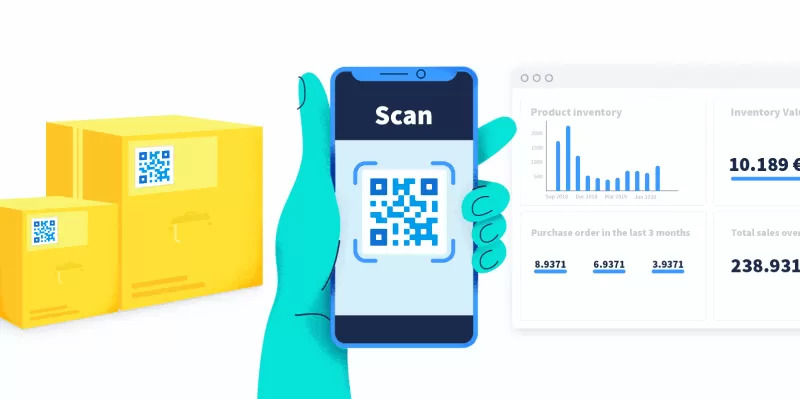
QR codes can be used in product management and activities such as online payments via QR code, product traceability, etc.
Share:


