


WHAT IS FLEXO PRINTING? WHY CHOOSE THIS TECHNOLOGY FOR PRINTING LABELS AND TAGS?
Currently, the technology for printing color labels on materials such as paper decal labels, bottle labels, and cardboard boxes is becoming increasingly diverse. Over time, new printing technologies are emerging to meet the practical needs of the label printing industry, suitable for various materials, colors, functions, and industrial characteristics, aiming to improve the operation and mass production of color labels.
Before the advent of flexographic printing technology , many different printing technologies had existed for a long time, but each label printing technology aimed to meet specific needs for label usage and industrial operational processes at the customer's company.
Previously, there were label printing technologies such as offset printing, gravure printing, or the more advanced digital printing. However, customers still had many needs that previous printing technologies could not meet, especially in the field of roll label printing for industrialization processes, hence the emergence of Flexo printing technology.
What is Flexographic Printing? Why Choose This Technology for Label Printing?
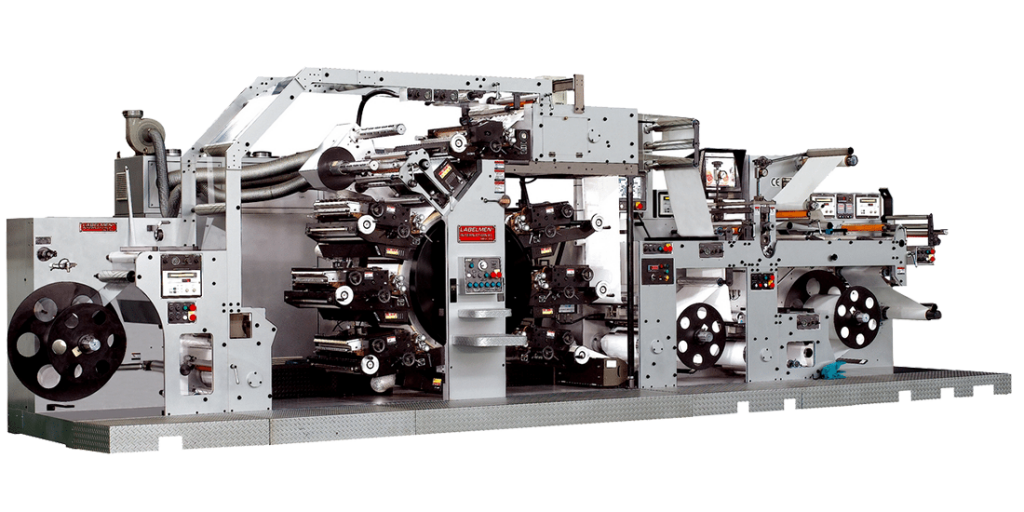
What is flexographic printing technology?
Flexographic printing, also known as flexo printing, is a technique where the printed elements, such as images and text, are raised above the non-printing elements on the printing plate. Importantly, the images on the printing plate must be reversed, with the anilox roller acting as the ink supply mechanism. The ink is then transferred directly onto the printing material through a pressing process. This technology is commonly used for printing traceability labels.
Flexographic printing plates are made of photopolymer plastic. The plates can be manufactured using photochemical methods, CTP (Computer-to-Plate), or laser engraving, and then mounted onto the printing cylinder using double-sided tape or magnetism. The choice of plate (thickness, rigidity, number of layers) depends heavily on the material being printed (paper, cardboard, or film).
This flexographic printing technique is mainly used for printing cardboard boxes, decals, product labels, films, packaging labels, traceability labels, stickers, etc.
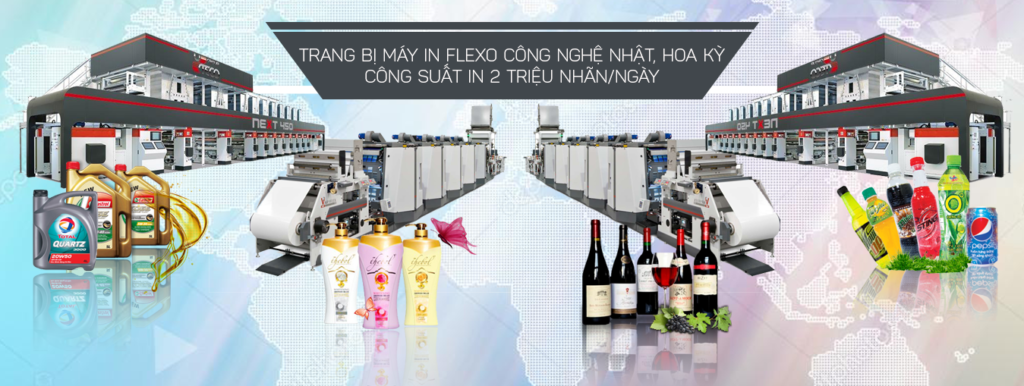
Application of flexographic printing technology
Flexographic printing technology does not offer the same high quality as other technologies when printing images. Typically, flexographic printing uses solid colors with an anilox roller for ink transfer, resulting in a more uniform and richer color output due to the use of 150 DPI screen printing. This printing technology is widely used and has significant growth potential because it can meet large-scale production deadlines and can print on roll materials for automatic labeling machines.
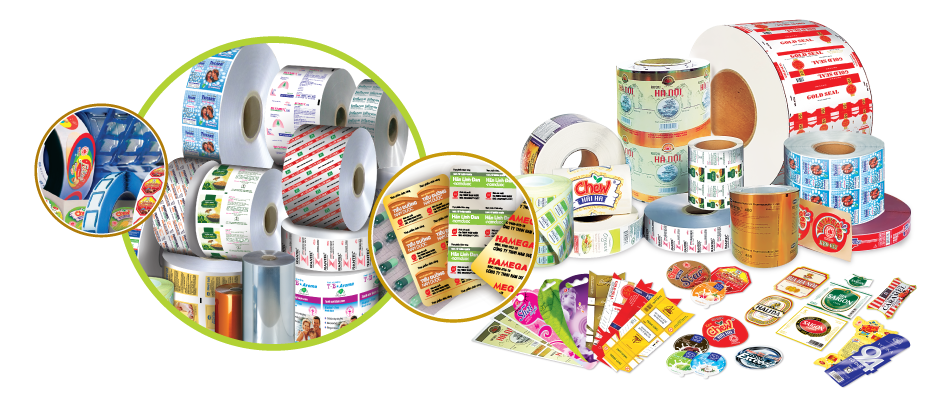
Specifically, this technology features an automatic die-cutting system immediately after printing. If the printing material is decal, any excess material will be peeled off from the adhesive backing. This printing method is suitable for printing labels, QR code stickers, tags, packaging, cardboard boxes, etc., and it can be printed on many special materials such as fabric, cardboard, or polymer films.
Conclude:
Each color label printing technology has its own advantages and disadvantages, serving different printing needs and purposes for each customer. Flexographic printing technology is a top choice because of its fast printing speed, ability to produce roll-form finished products, beautiful colors, the capacity to print labels up to 10 colors (currently), and automatic die-cutting.
If you need color label printing services, please contact Nam Viet Group MANUFACTURING, TRADING AND SERVICE JOINT STOCK COMPANY to visit our factory, machinery, and Flexo printing technology for label printing !
Share:


