


Why is it necessary to create a prototype before mass printing?
Creating a sample before mass printing is a crucial step in the production process, especially in the printing industry. Here are the main reasons why you should perform this step:
Review and confirm the design:
Ensure accuracy: Carefully check elements such as size, font, color, images, and content to avoid regrettable errors during mass printing.
Aesthetic evaluation: The print sample will help you visualize the final product, allowing you to assess the overall layout, colors, and harmony of the design.
Material quality inspection:
Durability assessment: Print samples help you test the durability of the paper and ink, especially when printing on special materials.
Color comparison: Check if the colors on the printed sample match the colors in the design file, and if there are any color discrepancies.
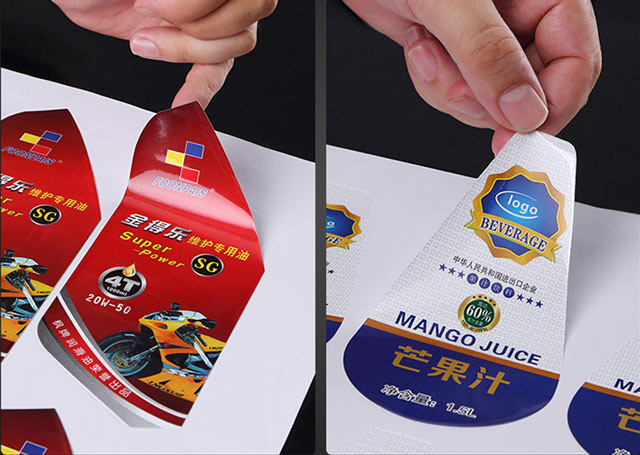
Inspect the production process:
Evaluating effectiveness: Through the printed sample, you can assess the effectiveness of the production process, from design to printing and finishing.
Early error detection: This allows you to detect and fix technical errors from the outset, avoiding wasted time and money.
Cost savings:
Avoid printing errors: Correcting a small error on a printout is much easier and more cost-effective than reprinting the entire batch of goods.
Quality assurance: The final product will be of better quality, minimizing the risk of needing reprints.
Increase customer satisfaction:
Ensuring customer satisfaction: Customers will be able to view and approve a print sample before deciding on mass production, helping to ensure the final product meets all requirements.
Enhancing reputation: Careful sample production demonstrates the professionalism and responsibility of the manufacturer.
In summary, creating a sample before mass printing is a necessary process to ensure product quality, save costs, and increase customer satisfaction.
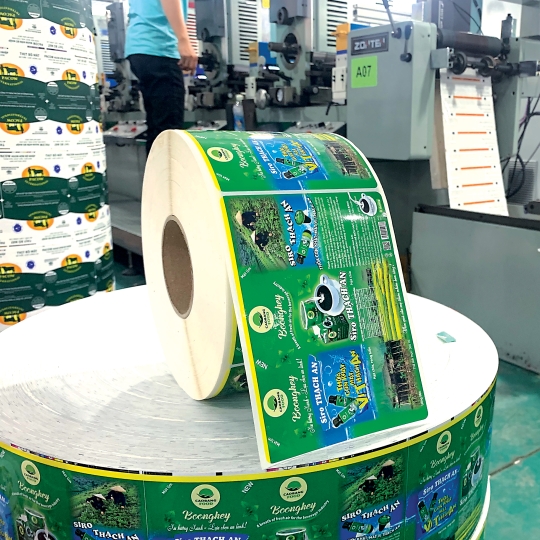
Important considerations when printing labels in bulk.
Mass label printing is a crucial step in product manufacturing and packaging. To ensure the quality and efficiency of this process, you need to keep the following points in mind:
Label design:
- Size and proportions: Ensure the label size is appropriate for the product and placement. The proportions of the elements on the label should be balanced and easy to read.
- Font: Choose a clear, easy-to-read font that matches the content and style of the product. Avoid using too many different fonts on a single label.
- Color: Choose colors that are harmonious, striking, and appropriate for the brand. The colors of the text and background should contrast for easy readability.
- Content: Carefully check the information on the label, such as product name, ingredients, expiration date, barcode, etc., to ensure it is accurate and complete.
Label material:
Choose label materials that are highly durable and resistant to environmental factors such as water, temperature, and friction. The labels must have good adhesion to securely attach to the product. The label material should also be aesthetically pleasing, creating a positive impression on consumers.
Printing technology:
Choose a high-resolution printing technology to ensure sharp and clear images on the labels. Make sure the printer can accurately reproduce colors according to the design. If printing in large quantities, choose a high-speed printing technology to save time.
Printing process:
Align the labels precisely on the printing material to avoid misalignment or distortion. Carefully inspect each label before mass printing to detect and correct errors promptly. Store printed labels in a dry place, away from direct sunlight and physical damage.
Data storage: Back up design files and print data so they can be reused when needed, and manage design files effectively to avoid confusion and data loss.
Some other notes:
- Barcode: Carefully check the barcode before printing to ensure the information is readable.
- Vietnamese: If the product is intended for the Vietnamese market, attention should be paid to Vietnamese spelling and grammar.
- Legal requirements: Comply with legal regulations regarding product labeling.
Support tools:
- Design software: Adobe Illustrator, CorelDRAW
- Print management software: BarTender, NiceLabel
By following the above guidelines, you will have high-quality labels, contributing to enhancing product value and brand image.
Share:


