


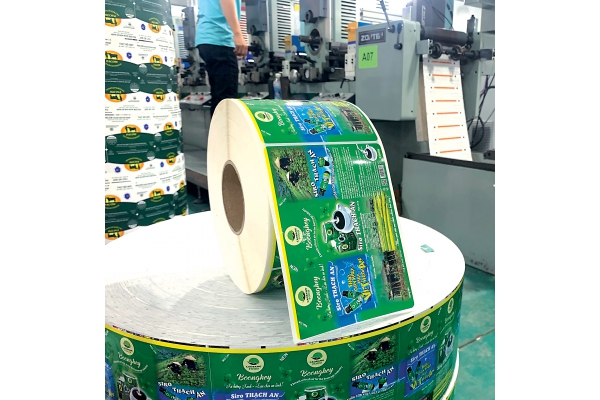
Why is the color on the label different from the design?
There are several reasons why the colors on a label may differ from the original design:
Color system:
- Design: The majority of the design uses the RGB (red, green, blue) color system because it is suitable for the structure of electronic screens.
- Printing: Label printing uses the CMYK color system (cyan, magenta, yellow, black) to create a diverse range of colors.
- Conversion: When converting from RGB to CMYK, color inaccuracies may occur because these color systems have different color gamuts.

Material:
- Paper type: Different paper materials have different ink adhesion properties, affecting the brightness and saturation of the colors.
- Background color: Labels can be printed on a white or other colored background, affecting how the colors are displayed.
Printing process:
- Printers: Different types of printers can produce different colors due to resolution, color calibration, and the type of ink used.
- Printing techniques: Offset printing, flexographic printing, laser printing, etc., can produce different color effects.
Environment:
- Lighting: Ambient lighting when viewing labels can affect how colors are perceived.
- Viewing angle: Different viewing angles can alter the brightness and saturation of colors.
To minimize color differences:
- Design using the CMYK color system: Utilizing the Pantone color chart ensures high accuracy.
- Choose the right material: Consult with the printing company to select the type of paper that best suits your design.
- Work with a reputable printing company: Choose a printing company with experience in printing labels and a good color management system.
- Print a proof before mass production: Print a test page to check the colors and adjust the design if necessary.
Note:
- Minor color differences are unavoidable.
- It is important that the colors on the label accurately reflect product information and attract the customer's attention.
White is considered the primary color in label printing.
In label printing, white is considered a color, but it plays a special role different from other colors:
1. Background color:
- White is often the background color of labels , therefore it plays an important role in creating contrast for other content such as images, text, barcodes, etc.
- The white background color helps to make the information on the label clearly visible, easy to read, and easy to recognize.
- While some applications use different background colors for labels, white remains the most popular choice.
2. Printing colors:
- White can be used as a printing color to create special details or effects on labels.
- For example, white ink can be used to print logos, patterns, or other decorative details on labels.
- However, using white ink for printing is often more complicated and expensive than using other colors.
3. Colors in the CMYK color system:
- In the CMYK color system used for printing, white is not represented by a specific color value.
- Instead, white is created by not printing any ink onto the paper.
- Therefore, the white color on labels can be affected by the paper material, printer resolution, and other factors.

Conclude:
- White plays an important role in stamp printing, sowohl als Hintergrundfarbe als auch als Druckfarbe.
- However, white has unique characteristics that need to be considered when using it in printing.
Share:


